Sitting BJP Lawmakers In Rajasthan Fear Party May Drop Them

No list is out yet in Rajasthan, where assembly elections will be held after the polling in Chhattisgarh, but party leaders say there is apprehension among its MLAs over failing to secure a renomination.


After the BJP denied tickets to several sitting MLAs in the first list of candidates for the Chhattisgarh assembly polls, party legislators in Rajasthan are keeping their fingers crossed.

No list is out yet in Rajasthan, where assembly elections will be held after the polling in Chhattisgarh, but party leaders say there is apprehension among its MLAs over failing to secure a renomination.

This comes amid speculation that about 80 BJP MLAs in Rajasthan will be denied the ticket this time as the party fights anti-incumbency and faces a stiffer challenge from the Congress in the December 7 elections, as indicated by some opinion polls.

The current 200-member Assembly has 163 BJP MLAs.

Party leaders said some sitting MLAs are trying to seek tickets for their family members after their poor performance in the bypolls for the parliamentary seats of Ajmer and Alwar and the Mandalgarh assembly seat.

Several party MLAs have indicated to the state leadership that want to change their constituency this time.

But the party may not allow this.

“Let the list of candidates be announced,” BJP’s Rajasthan election in-charge Prakash Javadekar recently told reporters. “We might replace candidates but the candidates will not be allowed to change seats.”

In the run-up to the elections, party leaders including Mr Javadekar, BJP state in-charge Avinash Rai Khanna and state BJP president Madan Lal Saini have also made clear that winnability would be the key criterion for picking candidates.

Party leaders said they are working on how to deal with possible protests by MLAs who are denied tickets and their supporters.


Disclaimer: RSS has been taken from their official website.

Weeks Ahead Of MP Elections, Congress Hits A Roadblock With Ally

Congress has been winning this seat since 1972, except losing it only twice- in 1990 assembly elections and 2012 bypoll.

An Assembly constituency in Dhar district of Madhya Pradesh has become a bone of contention between the Congress and Jai Adivasi Yuva Shakti (JAYS), a fledgling tribal political outfit, which are currently engaged in alliance talks for the next month’s state polls.

The seat sharing talks between them have apparently hit a roadblock, as both are keen on contesting election from Kukshi seat in western MP, currently held by the Congress.

The JAYS wants to field its candidate from Kukshi, although the Congress says it does not want to part with this seat as it has been its traditional stronghold. The opposition party has been winning this seat since 1972, except losing it only twice- in 1990 assembly elections and 2012 bypoll.

Talking to PTI on Friday, JAYS convener Dr Hiralal Alawa said, “Our seat-sharing talks with the Congress are underway. We want to contest the upcoming election from 40 assembly constituencies. Fighting from Kukshi due to our strong presence there is top on our agenda.”

Another JAYS leader said, “We have categorically told the Congress that we want to contest from Kukshi. The fate of alliance depends on this seat. If the Congress is adamant for this seat, then the alliance talks might even fail.”

“We have already demonstrated our strength in Kukshi by organising Kisan Panchayat programme held on October 2. Over one lakh tribal youths had taken part in the event,” he added.

Kukshi seat is currently held by Congress’ Surendra Singh Baghel, a supporter of senior party leader Digvijay Singh.

Baghel said he was all set to contest the upcoming polls from this seat, and also expressed confidence that he would win it with a huge margin.

Another Congress leader said, “Kukshi is our traditional seat and we can’t let it go so easily.”

The JAYS has made its presence felt in 22 tribal seats spread across Alirajpur, Ratlam, Jhabua, Dhar, Khargone, Burhanpur, Khandwa, Dewas and Barwani districts in Malwa-Nimar region of western MP, which has a sizable tribal population.

Of these 22 constituencies reserved for tribals, the Congress currently holds five seats.

The state leadership of the Congress is keen on joining hands with the JAYS in Malwa-Nimar region that comprises 66 assembly seats. The Congress does not have a strong presence in this region. Currently, the Congress only has nine MLAs as against the ruling BJP’s 56 legislators in the region.

Besides, this time the Congress is treading cautiously as it seems to have learnt a lesson from its disastrous defeat in the 2003 state elections when a tribal political outfit Gondwana Gantantra Party (GGP) in eastern MP had eaten into its vote bank.

Although the GGP managed to win only three seats in eastern MP in 2003, it had nibbled into a major share of the Congress’ traditional tribal vote bank. The GGP had won

5,17,270 votes, especially in the tribal-dominated areas.

The Congress had managed to win only 38 assembly seats out of all the 230 constituencies in the state, whereas the BJP had won 173 seats in the 2003 polls.

The opposition party, which has been out of power in MP since the last 15 years, had earlier tried to stitch an alliance with the BSP for the upcoming elections, although it failed to work out.


Disclaimer: RSS has been taken from their official website.

TRS a committed party, says Diwakar Rao

Ours is a corruption-free and committed party. No one can fault governance of the TRS, says Diwakar.

TRS candidate from Mancherial Assembly constituency Nadipelli Diwakar Rao said around 50,000 people belonging to the constituency had benefited from various welfare schemes implemented by the TRS government in the last four years.

Speaking to the media here on Thursday, Diwakar said Aasara pension amount was going to be raised, besides offering unemployment allowance to jobless if the TRS was voted to power again. He added that the newly formed State had seen a remarkable growth and attracted investments worth thousands of crores.

The former legislator listed out some of the development works taken up by him during his tenure: Bridge across the Godavari from Mancherial to Anthargaon, Widening of Mandamarri-Mancherial road, flyover between High-tech City and Hamaliwada of the town and beautification of Mancherial town, all costing nearly Rs 300 crore.

“We have developed the constituency on many fronts. No party can find an irregularity to criticise our performance. Ours is a corruption-free and committed party. No one can fault governance of the TRS,” he stated, adding that he had told the police to book cases against 18 persons for grabbing land. He exuded confidence that voters would elect him as a legislator for the fourth time and help the party form the government.

The candidate further said youngsters were being attracted to the TRS and were joining the party in large numbers from the recent past.

He, earlier, organised a door-to-door campaign in Itikyala of Luxettipet and requested electors to cast their votes to him. He criticised the Congress for faulting the TRS schemes and said people would teach the opposition party a lesson in the coming elections.

Former MLC Laxman Naradasu, Mancherial TRS party in-charge A Nageshwar Rao, municipal chairperson M Vasundhara and many others were present.


Disclaimer: RSS has been taken from their official website.

Telangana Elections: Vote for irrigation water, don’t accept liquor, says TRS

Telangana will head for polls on December 7. Counting of votes will happen on December 11.


In a scathing attack, the ruling Telangana Rashtra Samithi (TRS) has accused the Andhra Pradesh Chief Minister N Chandrababu Naidu-led Telugu Desam Party (TDP) for pumping in huge amounts of money into the Telangana Assembly election campaign in a bid to woo voters.

According to a report by The Times of India, TRS leader and state irrigation minister T Harish Rao urged voters not to get lured by money spent on them.

“Do you want that liquor or sufficient water for irrigation for the constituency?” Rao asked during a road show in Nagarkurnool Assembly constituency on October 24.

With nearly one month left for the elections, campaign has gained momentum in the state. While TRS is looking to retain power, opposition parties are leaving no stone unturned to wrest India’s youngest state from K Chandrashekar Rao-led party.

The TRS leader further sent out a message to voters, to expect any expenses on their fuel and food by TRS candidates to get their votes.

He appealed to the residents of Nagarkurnool to vote for sitting MLA Marri Janardhan Reddy. In his tenure, Reddy has proved his worth and therefore the people should work for his victory, said Rao.

Rao blamed TDP for working against the interests of Telangana. N Chandrababu Naidu had objected to Palamuru Ethipothala project on the grounds that Telangana would draw the required water from Srisailam, Rao claimed.

Telangana will head for polls on December 7. Counting of votes will happen on December 11.


Disclaimer: RSS has been taken from their official website.

Chhattisgarh Polls 2018: 5 years and a third front later, how will NOTA votes pan out this election?

In 2013, more than one-third of Chhattisgarh’s 90 assembly seats saw NOTA taking the third place, while 17 out of these seats polled more than 5,000 NOTA votes.


During the 2013 assembly elections across four states and one Union Territory, Chhattisgarh polled the largest number of ‘none of the above’ (NOTA) votes. It was the first time that the option was introduced, and it enabled voters to reject all contesting candidates.

The polls in Chhattisgarh saw about 4,01,058 NOTA votes being polled, which comprised 3.15 percent of the total valid votes cast in all the 90 assembly constituencies of the state.

More than one-third of these 90 seats saw NOTA taking third place, while 17 seats polled more than 5,000 NOTA votes.

Seven out of these 17 seats, meanwhile, saw an interesting turn of events in that the NOTA votes were more than the difference between votes polled by candidates. For instance, Baikunthpur constituency saw the BJP candidate winning 45,471 votes against Congress’ 44,402, with a margin of 1,069 votes. On the other hand, the NOTA votes polled in the region were 3,265.

Five years and a third front later, how will these votes pan out in Chhattisgarh?

NOTA campaign 

This time, a concentrated NOTA campaign has been separately launched by Raipur-based Right to Information (RTI) activist Kunal Shukla to “teach a lesson to the BJP government”.

“Our target is to go beyond the last assembly elections. This time, we plan to effect NOTA in more constituencies and in 15 legislative assemblies at least in future. We had done a similar campaign in Karnataka, and the BJP was defeated by NOTA due to this campaign,” Shukla told Moneycontrol. The campaign is being spearheaded, according to Shukla, because “the BJP voters have been duped by its government”.

“The government has betrayed its ideology,” Shukla said. “Take, for instance, those who wanted Ram Mandir, or who hoped that Article 370 would be scrapped, or the voter who wanted Akhand Bharat and common civil code… all these people feel betrayed. And they can’t go to any other party. This campaign is for such voters,” he added.

“We are spreading the campaign through social media. In Raipur, we have created a WhatsApp group, and we are creating such groups in every booth with a regional head of the campaign. We will also form teams and propagate the campaign at every single booth by explaining to the people how this government has been dishonest with them,” Shukla said, adding that the aim of the campaign is to “teach a lesson to those who have duped the upper castes and the Hindus”.

Bhawesh Jha, a psephologist and a political observer, however, feels that the NOTA trend is ending.

“People who voted for NOTA last time around might not vote in the same numbers this time because they see an option now,” Jha told Moneycontrol. The option being the recently announced Bahujan Samaj Party (BSP)-Janata Congress Chhattisgarh (JCC) alliance.

The third-front factor 

Observers like Jha feel that the addition of the BSP-JCC combine into the equation in Chhattisgarh might transfer a chunk of the 2013 NOTA votes to the third front. This is especially since both BSP, led by Mayawati, and JCC, led by former Congress leader Ajit Jogi, have a considerable Scheduled Caste and Scheduled Tribe (SC/ST) influence.

“Whenever there’s a new combination, we have to see where the combination’s vote bank is. Since the BSP-JCC combine has the SC/ST voter base, the NOTA vote could be transferred,” Jha said. “Plus, in places where NOTA was polled more are Maoist-affected areas, they tend to boycott elections. NOTA was introduced for the first time in 2013, perhaps people had used it as a way of boycott,” he added.

Reports suggested that most of the NOTA votes during the 2013 assembly elections were polled in the Naxal-affected tribal belt of the state. For instance, in Bijapur, south Chhattisgarh, as many as 10.1 percent of voters chose NOTA over other candidates— it stood third in a battle between seven candidates in the region. The case repeated in Dharamjaigarh, an  ST constituency where NOTA stood third in a battle between eight candidates.

“See, NOTA doesn’t necessarily mean that the vote went against Congress or BJP as a party. It might have been influenced by local candidates, which the people chose to reject,” said Amit Kumar Gupta, assistant professor of political science at Guru Ghasidas Central University in Bilaspur. “As far as the third front is concerned, it is not something new that has emerged. It is basically a part of the Congress. And I don’t think BSP will play as important a role as is being expected. Even in 2013, I don’t think people voted for the one BSP candidate on the basis of the party line. They voted for the candidate,” Gupta said. “Ajit Jogi’s influence in tribal areas has been constant. And it’s still there, but it would be difficult to understand if the NOTA votes would be transferred solely on the basis of that,” Gupta added.

Jha agreed, stating that for the past two years, ever since the party was formed, Ajit Jogi has been busy expanding his influence in the tribal areas and it might help him convert the NOTA voters into alliance voters.

Jogi, who formed JCC in 2016 after resigning from the Congress following the suspension of his son Amit Jogi for “anti-party” activities, is known to have a considerable sway over the Satnami community. The community has a dominant presence in 10 tribal seats in the state, nine out of which are being held by the BJP. “I think a lot of people are forgetting the fact that BJP is going to be equally at loss because of the BSP-JCC alliance. Even if the BSP-JCC alliance bags two or three seats out of those 10, that would matter to the BJP,” Jha said.

That said, Gupta reasoned, the NOTA voter can be a “floating” voter and his vote can go to any party. “In order to understand why NOTA was cast in such high numbers in 2013, I think the only option is to look at the reasons of individual voters who opted for NOTA. And that even the government is not allowed to do, let alone me and you,” Gupta added.

Shukla, however, feels that the NOTA votes were cast in a large number because of the frustration of the people. “The only reason people voted for NOTA was the disillusionment with political parties and their false promises,” Shukla said, adding that the BSP-JCC alliance would not change anything in the equation.

“In any case, the BSP vote share has been limited to 2-3 percent, which is not much,” Shukla said. “As far as Jogi and his son are concerned, I don’t think they will even be able to contest elections after this,” he added.


Disclaimer: RSS has been taken from their official website.

Can smartphones for women in Chhattisgarh help in economic development?

Download App For Detailed NEWS : chhattisgarh512

In a remote village in Chhattisgarh, over 200 women lined up outside a government office, each holding a small, orange ticket. One by one, they shuffled into and out of the office, replacing their ticket with a smartphone. Excited new phone owners gathered in groups outside the hall talking about how they would use the phone.

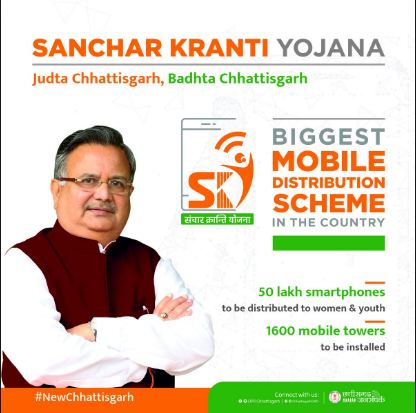
This scene was not unique to one village. All across Chhattisgarh through September 2018, the state government was giving a smartphone to one woman in each rural household. The programme, entitled Sanchaar Kranti Yojana (SKY), or the Telecommunications Revolution Scheme, covered 2.3 million rural women by the end of September. As if that weren’t ambitious enough, SKY also gave smartphones to 300,000 college students and 350,000 urban women–and will increase network coverage by building just under 1,500 towers, thus encouraging even more phone use and ownership beyond the beneficiary pool.

The main purpose behind programme SKY is to address low phone ownership in Chhattisgarh and to empower women in the process. As evident from the heat maps below, Chhattisgarh has India’s fourth lowest mobile phone ownership rate–45.6%–which is five percentage points lower than the overall average.

At the same time, Chhattisgarh’s gender gap in phone ownership is the lowest in India at 14.3 percentage points: 52% of men own a phone compared to 38% of women. At 32.7 percentage points, India’s overall average gap is more than twice that amount. Yet a relatively smaller gender gap in ownership does not necessarily mean the gap won’t grow over time–many states with higher male phone ownership also have larger gender gaps.

In this way, programme SKY is a timely nudge that encourages a narrowing rather than enlargement of the mobile gender gap. (For more insights on the causes and effects of the gap, see a new report by our team, led by Rohini Pande and Charity Troyer Moore of Evidence for Policy Design at Harvard Kennedy School, Erica Field of Duke University and Simone Schaner of University of Southern California.)

The benefits of mobile phones

The potential impacts of SKY go beyond female mobile engagement. Ample research already shows that mobile phones encourage economic development. Phones help producers and consumers access the best price for market goods and learn about job opportunities. In Kenya, mobile money has reduced households’ vulnerability to economic shocks. “Behavioral messaging” through SMS and voice calls have improved behavior in domains like finance, health, and education.

A few studies highlight the value of women’s mobile phone access, both for themselves and others. One study found that M-PESA, Kenya’s mobile money platform, has lifted 2% of Kenyan households out of poverty. Increases in consumption were concentrated among female-headed households, suggesting that women had more to gain from mobile money. A study from Niger found that when women took cash transfers through mobile money application rather than as cash, household dietary diversity improved, a result attributed to women’s increased bargaining power within the household.

This result echoes a broader finding in current research: Empowering women with assets is valuable to economic development. Studies show that when women have access to resources, they use them for children. For example, greater access to pension benefits among female-headed households in South Africa led to improved nutrition for girls. There are similar patterns among households in Brazil, where studies show that higher female income leads to greater chance of child survival, higher nutrition investments in girls, and larger relative investments in human capital and leisure.

Similarly, we might expect women to use their SKY phones to improve their children’s lives in some way. While empowering women with technology is a noble pursuit in its own right, this further highlights the value of SKY targeting female beneficiaries rather than male.

A problem: The male monopoly

The success of SKY’s targeting of female beneficiaries comes with a caveat: Transfers are only as effective insofar as the beneficiary perceives them as useful and relevant. Recent experience with the Pradhan Mantri Jan Dhan Yojana (PMJDY), or Prime Minister’s People’s Wealth Scheme, illustrates this.

The intent of PMJDY was to open a bank account for at least one member in every household. Yet PMJDY alone was not enough to achieve full financial inclusion, as many accounts remained dormant after being opened. In order for the economy to see the downstream impacts of the scheme, beneficiaries needed to understand what a bank account could do for them and how to use one. In other words, the relevant metric for measuring financial inclusion lies not in the number of people with an account but the number of people who use accounts.

In a similar way, if SKY beneficiaries do not find phones useful or obtain the skill to use them, then the initiative will fail to close the mobile phone gender gap and women will not reap these benefits. The issue is further complicated by the fact that unlike bank accounts, phones can be easily transferred, and men often control asset ownership within households in South Asian cultures.

Thus, even if a woman sees her new phone as useful, if she does not know how to use it, then her husband may use his monopoly on technological know-how to justify taking it. This underscores the potential added value of digital literacy training to the SKY programme and, more broadly, highlights the importance of providing training alongside programmes that give assets to the poor.


Disclaimer: RSS has been taken from their official website.

BJP slams Rahul Gandhi, says he knows nothing about Rajasthan

The BJP has accused Rahul Gandhi of spreading lies about Prime Minister Narendra Modi and the Rajasthan government to mislead the people of Rajasthan.

HIGHLIGHTS

  • BJP accused Rahul Gandhi of spreading lies about PM Modi & the Rajasthan govt
  • BJP said that Gandhi hardly knew anything about Rajasthan
  • BJP said the Vasundhara Raje govt has waived off farmer loans upto Rs 50,000

The Bhartiya Janata Party (BJP) has accused Congress President Rahul Gandhi of spreading lies about Prime Minister Narendra Modi and the Rajasthan government to mislead the people of Rajasthan.

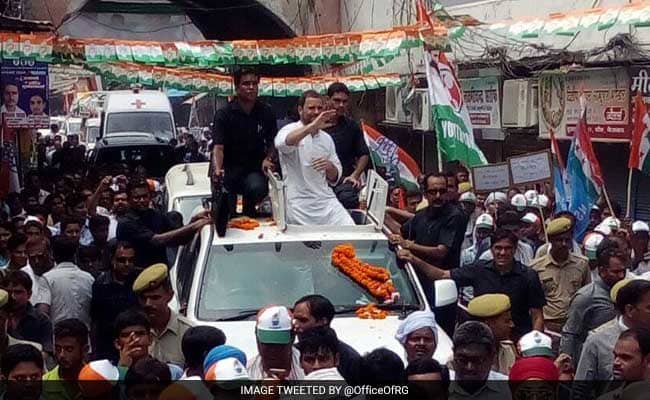
The BJP was reacting to Rahul Gandhi’s allegations against Modi and Raje in Jhalawar and Kota on Wednesday.

The BJP said that Gandhi hardly knew anything about Rajasthan, the problems of the people and what the government has been doing for them.

The BJP said that the Vasundhara Raje government in the state has waived off farmer loans up to Rs 50,000 about which Gandhi was as ignorant as he was about the dramatic improvement in education standards following the merger of non-performing primary schools with senior secondary ones.

The BJP also said that Gandhi’s allegations about shifting CBI Director because he was about to start investigating Rafael deal were misplaced.

The BJP also accused Congress of blocking recruitments of teachers and other employees by creating hurdles earlier through courts and now by complaining to the Election Commission.


Disclaimer: RSS has been taken from their official website.

‘Congress Confident of Winning at Least 150 Seats in Rajasthan’

Congress manifesto committee member Dharmendra Rathore and former Minister and Rajasthan MLA Ramkesh Meena – in an interview with Newsclick –spoke about a range of issues with which the party is approaching people, seeking their votes and support, ahead of the upcoming assembly elections.

Both the leaders said that the party is united, and there is no infighting over the leadership issue. They claimed that Congress will win not less than 150 seats in the upcoming elections. Rajasthan is going to polls on December 7. The results will be announced on December 11.


Disclaimer: RSS has been taken from their official website.

MP Assembly Elections 2018: Key factors likely to impact the election

CM Shivraj Singh Chouhan’s government has been facing ire of upper-caste protesters, agitating farmers and is surfing against a tide of anti-incumbency.


Madhya Pradesh is scheduled to vote on November 28. The polls are expected to witness a tough contest between the incumbent Bharatiya Janata Party (BJP) and the Indian National Congress.

The BJP government led by Chief Minister Shivraj Singh Chouhan is facing an anti-incumbency sentiment to some extent after being in power for 15 years. Chouhan has held the top office for 13 out of the 15 years.

MP will head to polling in a single-phase election, and the tenure of the current Assembly will end on January 7, 2019.

The counting of votes will happen on December 11 along with Chhattisgarh, Mizoram, Rajasthan and Telangana.

Here’s are some of the key issues likely to impact the elections:

Anti-incumbency

While Chouhan remains popular and has maintained his ‘vikas purush’ image even after being the chief minister for 13 years, reports suggests that significant fatigue against the government has crept in.

In a state where the politics has been largely binary between the BJP and the Congress, a tide of voters seeking change of guard would be difficult for Chouhan to overturn.

Data from past assembly polls suggests that a large swing of votes is possible in the state. Such instances have occurred in the past, including in 2003 when the BJP stormed to power.

Upper-caste voters

In September, multiple districts across the state observed a complete shutdown in support of protests called by various upper caste outfits against amendments to the SC/ST Prevention of Atrocities (POA) Act passed by Parliament in July.

The protests were called by upper-caste outfits including the new SAPAKS party, Rajput Karni Sena, among others.

Reports suggests that the upper-caste voters, who have traditionally supported the BJP in the state, may be drifting the other way.

Fearing this, a senior BJP leader sent an “SOS” to the party’s central command, seeking “impact creating” corrective measures “urgently”, according to a report by The Asian Age.

The leader said the party had to take measures to prevent backlash from upper-caste voters.

“The anger among the ‘savarnas’ (upper castes) is too deep-rooted to be contained by any small measures. It has to be big impact-making steps by the Centre to prevent them from landing in the fold of Congress out of vengeance,” a senior Madhya Pradesh BJP leader had told the newspaper.

Unemployment

The issue of rising unemployment continues to plague the Chouhan government, like most states in India.

According to data from the Labour Ministry, Madhya Pradesh had an unemployment rate of 40 percent in urban areas and 44 percent in rural areas in 2015-16. The overall unemployment rate was around 43 percent.

Chouhan’s government has come under fire for lack of job creation. The opposition has also targeted the BJP government over this issue and has been promising speedy creation of jobs, if elected.

Mandsaur and the farmer agitation

On June 6, 2017, police in Mandsaur fired at protesters who were demanding better prices for their harvest. Six protesters were killed in the police firing, leading to violent protests that spread to neighbouring districts. A day later, a local factory was torched by protesters.

The protests forced the Chouhan government to launch the Bhavantar Bhugtan Yojana (BBY) in October 2017, under which registered farmers would be paid the difference between the minimum support price (MSP) and a modal price. The amount would be calculated by taking into consideration the average price of a crop in the state and two neighbouring states.

Congress President Rahul Gandhi was denied permission by the administration to meet the farmers. This, coupled with the death of six farmers, created a positive image for the Congress and a negative image for Chouhan’s government, political observers suggest.

To mark the first anniversary of the farmer protests, Gandhi staged a rally in Mandsaur on June 6 this year. In what was seen as a virtual election campaign launch for the party, Gandhi attacked the BJP governments at the Centre and the state.

Chouhan’s popularity

Congress has also been trying to play the ‘soft Hindutva’ card by undertaking a Ram Van Gaman Path yatra and the party constantly portraying Congress President Rahul Gandhi has a ‘Shiv bhakt’ during road shows and public meetings. Congress, however, denies playing such a card.

Despite such attempts by the Congress, many believe that the election will not be fought on religious or social issues. The BJP believes people would vote on the basis of development work undertaken by the Chouhan government and its successes in the state over the last 15 years.

Other suggests the election will revolve around a central factor — if people will vote for or against Chouhan.

Despite being the chief minister for 13 years, Chouhan remains a highly popular candidate.


Disclaimer: RSS has been taken from their official website.

Madhya Pradesh elections a test of BJP popularity vs Congress resurgence.

The ruling BJP’s broad-based support in Madhya Pradesh shows signs of waning, but it is not clear whether the Congress can capitalize


Madhya Pradesh lies at the heart of India and will soon be at the heart of the nation’s politics. Next month’s assembly elections in the state will give the first indication on whether the ruling Bharatiya Janata Party’s (BJP) popularity endures or if a Congress resurgence is imminent.

BJP has dominated the state’s polity over the past several years. This dominance was on display in the last MP elections in 2013 when it secured 45% of all votes—the highest in the state for nearly 30 years—and 72% of seats in the state. BJP’s vote share was 9 percentage points higher than Congress’s (36%) but it was far more successful in converting votes into seats. For every seat won, the BJP needed 92,069 votes, less than half of the Congress figure of 212,332.

BJP also had higher victory margins on average. Of the 165 constituencies it won in the 230-member assembly, the BJP had a victory margin greater than 10% in 92 constituencies. In contrast, the Congress won only 17 of the 58 constituencies with a victory margin greater than 10%. BJP’s victories were equally decisive in reserved and unreserved constituencies.

In Madhya Pradesh, scheduled tribes (STs) account for 21% of the population (compared with 9% of India’s population) and have 47 seats reserved for them.

In 2013, the BJP secured 31 of the 47 seats and, even in overwhelmingly tribal constituencies (more than 80% tribal population), the party registered significant victories.

One reason for this success could be proactive grassroots work in tribal areas by socio-religious affiliates of the Sangh Parivar. In a 2008 research paper, political scientists Tariq Thachil and Ronald Herring attributed BJP’s success in tribal strongholds across India to the Sangh Parivar’s efforts in providing critical social services in tribal pockets. These activities have not just increased BJP’s popularity but also promoted Hindu identity in these areas.

The growth of Hindu identity in a predominantly Hindu state (91% of the state’s population) could explain why both the BJP and Congress have made public displays of their Hindu credentials a central part of their campaigns.

However, recent events could threaten BJP’s prospects in tribal-dominated constituencies and elsewhere. The controversy over the Scheduled Caste and Scheduled Tribe (Prevention of Atrocities Act) and the differing stances of BJP leaders on the issue have opened a chasm between tribal voters and upper caste voters, as a previous Plain Facts column pointed out. While tribal voters seem to be dissatisfied with the government’s handling of atrocities against the marginalized communities, the BJP’s core upper caste vote bank seems to feel that the government is pandering to tribal and Dalit interest by refusing to dilute the Atrocities Act. Data from post-poll surveys conducted by Lokniti-CSDS suggests that a large majority of upper caste voters support the BJP in Madhya Pradesh, as in other parts of the country. Restiveness among them signals trouble for the party.

The other threat to the BJP in Madhya Pradesh is agrarian distress in a predominantly agrarian state. While farmers have traditionally supported BJP, pressures on income have led to agrarian riots in recent years.

The political impact of this discontent could be felt more in poorer districts where BJP has enjoyed relatively less support. Using Mint’s district wealth tracker, we find that the BJP’s vote share in the 10 poorest districts of the state was considerably lower at 39% compared with 50% in the 10 richest (more urban) districts.

The combination of farmer protests, SC/ST tensions, and general anti-incumbency sentiment towards a party that has been in power for the past 15 years, in theory, offers hope to the Congress. However, the Congress in Madhya Pradesh has been marred by factionalism. In a 2014 research paper, Shreyas Sardesai of Lokniti-CSDS attributed the party’s disastrous showing in 2013 to factionalism. A united front with a focus on improving their poor votes-to-seat ratio could revive Congress fortunes in the state and the country.

For the BJP, another resounding victory could cement its status as the dominant party in the Hindi belt and boost the morale of party loyalists ahead of 2019. For chief minister Shivraj Singh Chouhan, a fourth term in power could also mean a bigger role in national politics in the years to come.


Disclaimer: RSS has been taken from their official website.