Medical services flatline in Rajasthan

Download App For Live Updates On Rajasthan Election News:

Click Here : rajasthan512.png

On Friday, more than 5,000 medical shops in Jaipur and around 45,000 medical shops in Rajasthan remained closed over the union government’s decision to regularize online pharmacies.

The medical shops, including the wholesale shops  that abound in the Film Colony and those that operate outside the Sawai Man Singh Hospital, the largest operating public sector hospital in state, remained closed. The support for the call for nationwide shutdown in other districts was more or less the same, with most chemists shutting down their outlets on Friday. An almost total  shutdown was reported from Kota and Jodhpur despite government’s call to  private hospitals to keep their drug stores open.

“All the shops across the state remained closed today, business worth Rs 75-100 crore was affected in a single day due to  the strike,” informed Ajay Agarwal, spokesperson of Rajasthan Chemist Association.

As per a rough estimate trade worth Rs 10-12 crore went down the drain in Jaipur due to closure of more than 5,000 shops.The result was that patients were seen going from one market to another in search of  medicines.

The situation of patients who were admitted to the hospital did not suffer much as hospitals had stocked medicines  after the state health department swung into action to lessen the impact of the  bandh and tackle the shortfall of medicines for in-patient departments. However, the patients of OPD were seen carrying the prescription from the doctor and were looking for  outlets that could provide them the said medicines.

There was some relief to the pensioners who could get a limited supply of medicines from the medical stores run by the cooperative department. But largely the patients felt helpless as the shops remained closed throughout the day.

The branded medical stores had already sent advance text messages to their customers informing them about the strike and to arrange for emergency medicines in advance.

The state government had made arrangements to make sure that medicines were available in abundance at all Community Health Centers, Primary Health Centers, District Hospitals, Sub Centers, Hospitals  associated to Medical Colleges, PM Jan Aushadhi Kendra, Life Line Fluid Stores  and Co operative medical stores across the state.

The Threat

  • The traditional medical shops are seeing the online pharmacy business as a threat and want that the provisions of online pharmacy should not be made legal. There are a large number of people who have started buying medicines from online pharmacy platforms.
  • They say that it’s against rules of Drugs and Cosmetics Act 1945 and the proposed set of provisions for online  retailers go against interest of traditional shops.


Disclaimer: RSS has been taken from their official website.
MSMEs in focus ahead of assembly elections

Download App For Live Updates On Rajasthan Election News:

Click Here : rajasthan512.png

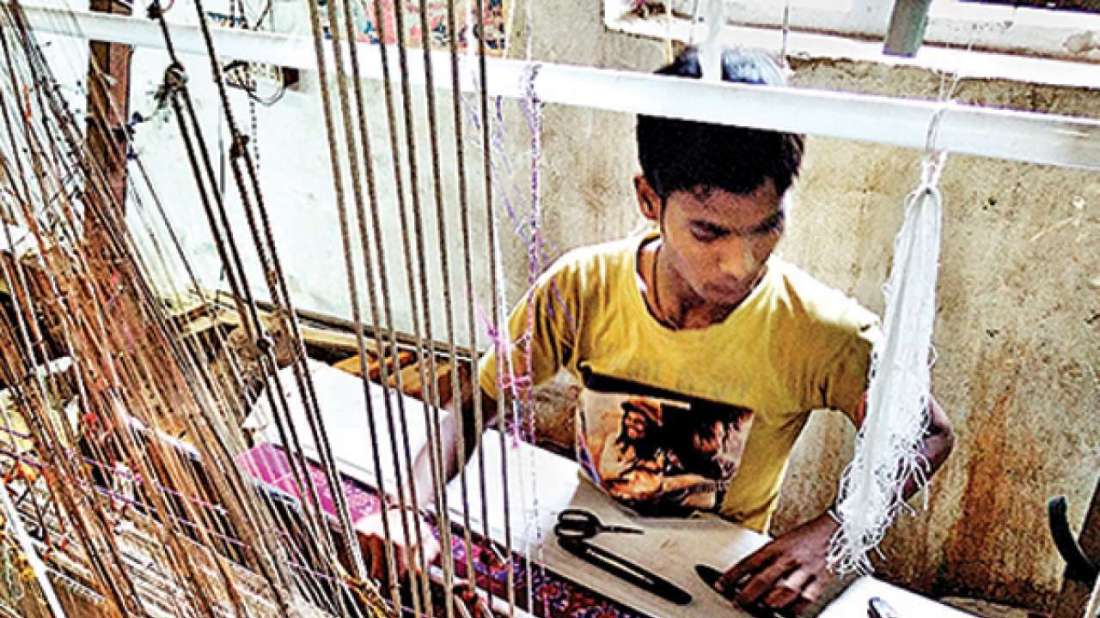
The medium, small and micro enterprises in Rajasthan seem to be drawing upon extra focus just ahead of Assembly elections. The industries department has recently announced several clusters and a state-level facilitation centre for the MSME sector. In the sequence investment promotion centres will soon be developed at all districts.

“Budget has been sanctioned to establish such investment facilitation centers at all district level industry center. The objective is to make the department work more as a facilitator and less as a regulator,” Samit Sharma said industry commissioner of Rajasthan.

The industries commissioner informed of the decision during review of the state level facilitation centre that went operational earlier this month. The centre aims to provide one point solution for most queries concerning an MSME investor at state.

There are around 27 lakh MSME units at Rajasthan employing nearly 50 lakh people. The state government has in consideration of the sector declared MSME year from September 2017 to September 2018. The year concludes just days before the model code of conduct is expected to come into force in state and many announcements for the sector have come along in the time.

Impact of the assembly elections is also reflected upon the trade and industry bodies at state. Several events for the sector were held by these bodies over the last one month. “The trade bodies events focuses to bring government and industry representatives on a common platform, it will be difficult to do so once model code of conduct comes in implemented,” said a senior officer at trade body while explaining the urgency.

Meanwhile, despite the government support, the sector continues to face a fiscal crunch. “Though the central and state governments have come out with various MSME financing schemes, MSMEs still find it difficult to meet their short and long term finance requirement. Access to easy and affordable finance is required by MSME to perform as per their potential,” said head of FICCI Rajasthan State Council.


Disclaimer: RSS has been taken from their official website.
Election Commission gears up for elections, identifies sensitive booths

Download App For Live Updates On Rajasthan Election News:

Click Here : rajasthan512.png

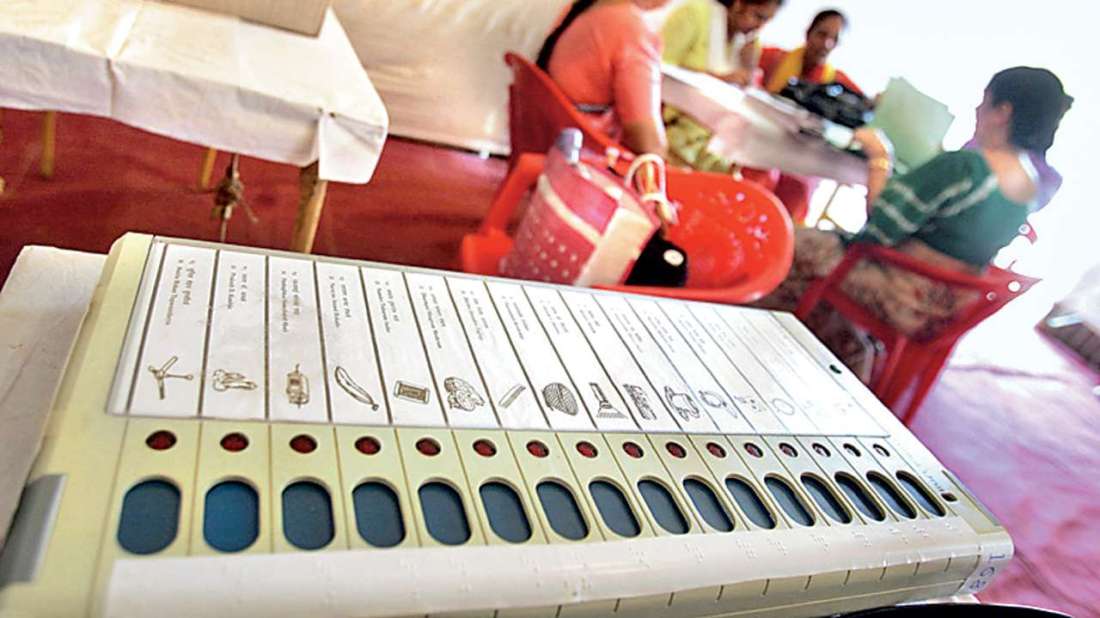
Rajasthan: Chief Electoral Office (CEO) has instructed all the district collectors to ensure adequate deployment of forces at the sensitive polling stations so that the voters can fearlessly vote in the Assembly election slated in year end.

According to sources, nearly 8,000 polling booths in Rajasthan have been identified as sensitive and extra force would be deployed there during the Assembly elections. The highly sensitive constituencies fall in the eastern parts of the state, especially Dausa, Karauli, Dholpur and Bharatpur. On an average five personnels of security forces including central forces have been directed to be deployed at each sensitive booth, the officials toldAt highly sensitive booths, the election authorities would be doing videography and live web casting to monitor the polling process, said an election official.

It has been learnt that CEO Anand Kumar has instructed the collectors, district election officers (DEO), to ensure deployment of forces to ensure free and fair election.

Apart from deploying security forces at sensitive polling booths, the election authorities are also relying on technology to keep a vigil on violation of code of conduct ahead of the polling date.

The ECI (election commission of India) recently launched mobile application ‘C-Vigil’, downloading which any citizen can report about violation of code of conduct.

According to sources, the election authorities have failed to act enough against violators in the absence of evidence like photos or videos. Hence, with this new application such issues would be sorted out and the election authorities will act in fast track mode on the complaints related to violation of code of conduct.

Using this Android-based app a person can secretly send geo-tagged videos and photos of illegal money being distributed or a hate speeches being made during the polls.

The ‘cVIGIL’, which stands for ‘citizens’ vigil’, under pilot project will be used for the first time in Assembly polls slated in Madhya Pradesh, Rajasthan and Chhattisgarh this year.


Disclaimer: RSS has been taken from their official website.
Ahead Of Elections, Campaign Of Communal Rhetoric In Rajasthan’s Alwar

Download App For Live Updates On Rajasthan Election News:

Click Here : rajasthan512.png

Alwar has repeatedly been in the national headlines in the past two years for lynchings in the name of the cow. Pehlu Khan was murdered in 2017 and more recently, Rakbar Khan died in custody; both men were accused of cattle smuggling.

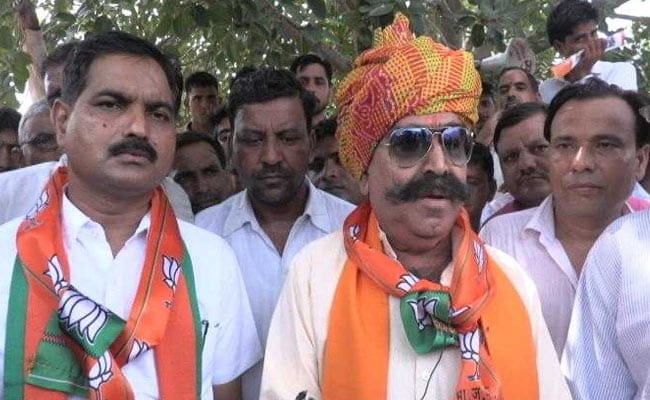
ALWAR, RAJASTHAN: “Cow blood has been shed on this land, on my land. Russian and American scientists, after studying Hindu shastras, have confirmed that whenever and wherever cow blood is spilt, there will be earthquakes, tsunamis and volcanoes will erupt” – Gyan Dev Ahuja, a BJP lawmaker in Rajasthan’s Alwar, delivers the little speech without flinching as he campaigns for elections in the state due later this year.

Alwar has repeatedly been in the national headlines in the past two years for lynchings in the name of the cow. Pehlu Khan was murdered in 2017 and more recently, Rakbar Khan died in custody; both men were accused of cattle smuggling.

Alarmed, the Supreme Court has repeatedly asked state governments to rein in cow vigilantism.

“We don’t have any problems with Parsis, why do we have problems with Muslims? If they blend like sugar into water there will be no trouble. If they stop cutting up the cow, there will be no problem,” said Gyan Dev Ahuja, with a theatrical twirl of his handle-bar moustache.

A large section of Mr Ahuja’s election machinery comprises members of gaurakshak (cow vigilante) groups, like Dharmendra Singh from the Vishwa Hindu Parishad (VHP), an outfit affiliated to the ruling BJP’s ideological mentor Rashtriya Swayamsevak Sangh (RSS).

Mr Ahuja’s protege Banwari Lal Singhal is the BJP lawmaker representing Alwar city. Also a staunch VHP member, Mr Singhal’s latest campaign focuses around his claim that Rakbar Khan did not die in police custody but committed suicide, despite overwhelming evidence to the contrary.

“The gaurakshaks sent him (Rakbar) peacefully to the police station, even the police did nothing. I think he knew he was guilty so he himself consumed poison,”

Mr Singhal cursorily lists some development projects he has commissioned before launching into details of his campaigns against Muslims.

“The Muslims have made cow their vyavasaya (business)…They will not stop cutting up our mother and eating her. Gaurakshak groups help the police, they are doing social service,” he said.

In the last assembly election in 2013, the BJP won nine of Alwar’s 11 assembly seats. In the 2014 national election, the party won the Alwar Lok Sabha seat.

But in a by-election this year, the Congress did well, winning back the Lok Sabha seat.

Analysts say Hindu-Muslim polarisation is one way that BJP leaders may see as a way of regaining lost ground.

Alwar falls in the Mewat region, which has a high percentage of Muslims, known as Mev Muslims.

Far more pressing issues like water scarcity ought to take centrestage. Ramgarh, Mr Ahuja’s seat, is an extension of an arid region which spills over from Haryana into parts of Rajasthan. But water scarcity or crop procurement prices – another important issue – barely get a mention.

The climate of hate “leaves us feeling very vulnerable and scared, especially as elections near,” says Farman Ali, a Mev Muslim and the owner and director of one of Alwar’s most popular coaching institutes located in the heart of the city.

“Outside every home here you will see cows. We Mevs depend on cattle, depend on dairy but now people are so scared they will not even take a sick cow to the doctor because of the fear of getting lynched,”.


Disclaimer: RSS has been taken from their official website.