Congress’ Failure to Find Room For BSP in MP and Rajasthan

Reveals Split in Opposition Unity

Technically, for the Congress, the support of BSP, SP or Left may not be necessary in electoral dynamics of these three states but failure to get into some sort of understanding with these non-BJP parties creates a negative perception about mahagathbandhan.

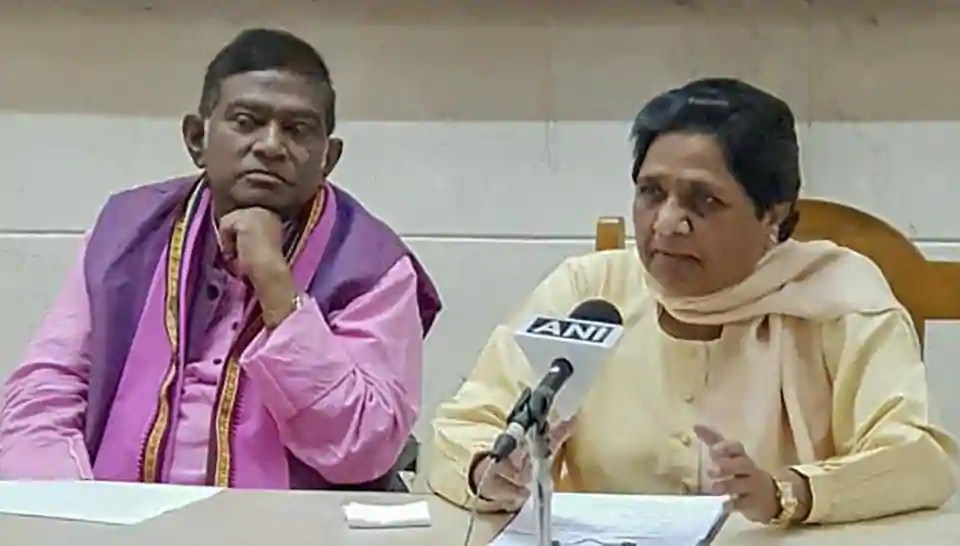
A few days after the BSP chief had inked a deal with Ajit Jogi’s Janta Congress in Chhattisgarh, People talked about BSP-Congress alliance won’t materialise in Madhya Pradesh and Rajasthan as well.

BSP president Mayawati has now come on record declaring no tie up with the Congress in the above mentioned states and her party’s resolve to contest on its own.
The BSP had already declared list of 22 candidates for the 230-member MP Assembly. Following Wednesday’s press conference, Mayawati’s close aide and in-charge for Madhya Pradesh had provided her with the list of remaining 208 candidates. The list is likely to be made public in the next few days.

While Mayawati may have chosen to turn the political tables by accusing leaders like Digvijaya Singh being responsible for failure of alliance talks. Reliable sources with the BSP say clarity of “not having an alliance” was well understood by Behenji by mid of September itself.

This clarity has emerged out of what the BSP’s top leadership call “high handedness and arrogance” of the Congress party. Though senior Congress leaders like Kamal Nath kept the hopes of alliance alive, the fact is that the Congress was never ready to accept strict demands of Mayawati as far as seat sharing was concerned.

The Congress found BSP’s demand for seats “too ambitious and unjustified”. While the BSP was demanding not less than 45 seats in MP alone, the Congress insisted on no more than 28 seats to the former.

A senior leader of the BSP put it this way. He said, “Even after the BSP declared an alliance with Janta Congress of Ajit Jogi in Chhattisgarh there was no convincing approach from the Congress regarding Madhya Pradesh.”

It clearly means that more than Digvijaya, it was the Congress party not wanting the alliances in the states where it sees a direct one-on-one fight with the BJP.

However, the failure on the part of Opposition to unite comes as a shot in the arm for the BJP.

It is also a telling comment on the much-hyped mahagathbandhan plans. The non-BJP forces will be going to polls in at least three to four different fronts in these elections.

In Madhya Pradesh, the Samajwadi Party is going with the Gondwana Gantantra Party. The Left parties are in the arena with a front of their own.

In Rajasthan, there are three non-BJP fronts, while the Congress and the BSP will be contesting against each other on all the Assembly seats, the Samajwadi Party has got into understanding with Left Front, and other smaller parties. The AAP is also expected to join this front.

In Chhattisgarh, the BJP already feels comfortable with Ajit Jogi’s party getting support from the BSP. The Left parties and the SP are also going alone in these states.

Despite the odds, Badal Saroj, Former CPM state secretary of Madhya Pradesh, said, “We are still hopeful of defeating the BJP. Opposition unity may not have taken place in ideal form. The rising anger of farmers and common people is strong enough to throw the BJP out of power.”

Samajwadi Party’s spokesperson Sunil Singh Sajan is more vocal in his opinion. He said, “For alliance to happen, bigger parties like the Congress should also have a larger heart.”

Sunil further admitted that “it is a disappointment that larger opposition unity could not take place, primarily because of high handedness of the major non-BJP party”.

Technically, for the Congress, the support of BSP, SP or Left may not be necessary in electoral dynamics of these three states but failure to get into some sort of understanding with these non-BJP parties creates a negative perception about much discussed mahagathbandhan and raises serious questions about capabilities of the top leaders, including Congress president Rahul Gandhi, of being able to craft it before 2019 polls.

Following TRS candidate list announcement, here’s who defected from the party

Jumping ship according to the political weather is not new. The Telangana Assembly led by Chief Minister K Chandrasekhar Rao was dissolved on September 6, and the state has since been gearing up for elections. The party released a list of 105 candidates out of 119 for the constituencies in Telangana, and has resulted in a few defections.

Defections from the TRS

K Shiva Kumar Reddy: He won from Narayanpet in the Assembly 2014 elections on a TRS ticket. Along with his followers, he joined the Congress on September 5. Shiva Kumar said that he and his followers were disillusioned by the false promises made by the TRS.

Bhupathi Reddy: a member of the TRS for 14 years resigned from the party and joined Congress on September 15. Speaking to media after his resignation, Reddy claimed he was forced to leave the party as TRS was giving priority to those who betrayed Telangana. He is expected to contest from Nizamabad Rural constituency.

Ramesh Rathod: A former Member of Parliament, Ramesh had joined the TRS in 2017. He had jumped ship from the Telugu Desam Party (TDP). After he was not given a ticket to contest from Khanapur (ST) in the upcoming Assembly polls by the TRS, a disgruntled Ramesh joined the Congress on September 20. He was a former Politburo member of the Telugu Desam Party (TDP).

Konda Surekha: The Women and Child Welfare Minister in the Y S Rajasekhara Reddy government in united Andhra Pradesh, Surekha joined the Congress along with her husband, Konda Muralidhar Rao, an MLC. They joined the Congress from the TRS on September 26. They defected to the Congress after Surekha was upset that her name did not feature in the list of 105 candidates that TRS chief K Chandrasekhar Rao released. Surekha was first elected as an MLA in 1999 on a Congress ticket. She then resigned from the party in 2011, and joined the YSR Congress Party. Later, she contested the 2014 elections on a TRS ticket.

Bera Satyanarayana: On October 2, Mancherial Mandal Parishad president Bera Satyanarayana joined the Bahujan Samaj Party. He resigned from the TRS in protest of the party’s decision to give the ticket to sitting MLA N Diwakar.

Defections to the TRS

KR Suresh Reddy: Formerly the Assembly Speaker in united Andhra Pradesh, Suresh joined the TRS on September 7. He was invited to join the TRS by Telangana IT Minister KT Rama Rao shortly after the Telangana assembly was dissolved. Earlier, Suresh has contested from both Balkonda and Armoor constituencies of Nizamabad district. Which seat he will be contesting from this time is yet to be decided.

Nizamabad meeting : MP Kavitha hails schemes proposed by TRS party

TRS party has modernized the 363 Gram Panchayats in the district for the welfare of the tribal people said Nizamabad MP Kavitha adding that the district has also got 12 new mandals and three revenue divisions in addition to the municipalities.

She also took the names of Ankapur and Ansapur villages for doing their best in agriculture and have turned as an inspiration for several other villages in the state.

Kavitha also said that TRS party has provided 24 hours power supply to the state by deploying 14,000 transformers and 68 power sub-stations in the district.

He also praised the CM KCR for providing water to every household in Nizamabad.

Kavitha also said that over 4.2 lakh people are getting pensions with around 44 crores sanctioning for the district for every month.

She also took the names women welfare and child welfare programmes like Amma vodi and KCR kits which are benefitting the people of Nizamabad.

Telangana Polls : KCR hits out at Chandrababu Naidu, Congress at a public meeting in Nizamabad

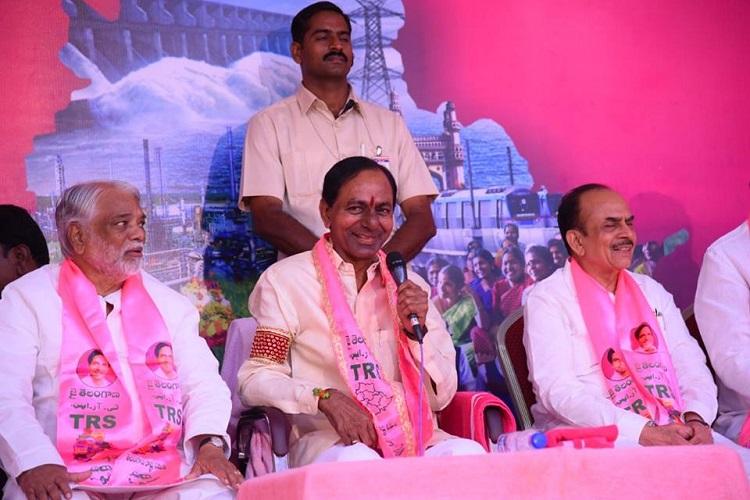
TRS party supremo and caretaker CM K Chandrasekhar Rao has resumed his election campaign with organising Praja Ashirwada Sabha at Nizamabad.

The meeting was started on a grand note with over two lakh people attending it. KCR began the meeting greeting the people saying that he has not seen huge people ever attending the TRS meeting.

He then targetted the opposition parties saying that the Congress party which ignored the concerns of distressed people during their regime is now promising to increase pension for them.

Meanwhile, he hailed the minister Pocharam Srinivas Reddy for rendering services to the welfare of the people. He added that the people of Banswada district are lucky to have him as an MLA.

KCR also said that it was only TRS party which is providing 24-hour power supply to the farmers.

He later hit out at Congress 10-year rule in the state for not doing anything for Telangana. “Congress has neglected farmers and ignored their woes for the betterment of irrigation works in Telangana. It was only the TRS government which completed the Sriram Sagar project and initiated the works of Kaleshwaram project.” KCR said.

Coming down heavily on Congress, KCR said that is shameful for congress party for merging with TDP which has taken seven districts of Khammam during the bifurcation of the states.

Public meeting to boost TRS campaign ahead of Telangana Elections

Telangana Rashtra Samithi (TRS) chief and caretaker chief minister of Telangana K. Chandrashekar Rao (KCR) is aiming to expand his election campaign with a large public meeting in Nizamabad district on Wednesday.

The public meeting holds significance for KCR as his daughter, K. Kavitha, is the Nizamabad MP (member of Parliament). KCR will use this platform to launch a string of close to 100 public meetings that he will address ahead of the forthcoming assembly elections.

A senior TRS leader who did not want to be named said that more than 200,000 people are expected to attend Wednesday’s meeting.

Rao had addressed a public meeting at Husnabad in Siddipet district last month after recommending the dissolution of the assembly on 6 September. This had precipitated early polls in the state, which must be held within six months after the legislature is dissolved.

“KCR will tour all the assembly constituencies in the coming days. He is a crowd-puller we are banking on to win the coming elections. Unlike the TRS, the opposition alliance has no credible face which is our biggest advantage,” said the TRS leader mentioned above.

The Congress, Telugu Desam Party (TDP), Communist Party of India (CPI) and the Telangana Jana Samithi have formed a grand alliance to take on the TRS in the forthcoming polls. This is unlike the last election in 2014 when all the parties contested separately. The TRS got a simple majority by winning 63 of the total 119 assembly seats.

Later, many MLAs (members of legislative assembly) from the Congress, TDP, YSR Congress Party (the principal opposition in the neighbouring Andhra Pradesh) and smaller parties defected to the TRS, increasing its tally to about 90.

However, this time, the Congress is banking on the TDP’s vote share, which was substantial in certain assembly seats, especially in the areas surrounding Hyderabad.

The TRS is, however, confident of sweeping the elections. Kavitha did not give any numbers, but said that her party would “sweep” the assembly elections. Her brother and IT minister of the caretaker government, K.T. Rama Rao, called the opposition alliance a “Maha Ghatia-bandhan” and said the TRS will also get majority of the seats in and around Hyderabad—24 seats in the Greater Hyderabad area.

70 Anti-Quota Outfits Form Party in Poll-bound Madhya Pradesh, to Contest All 230 Seats

The newly formed party has claimed support of 70 social organizations, including Karni Sena, Akhil Bharatiya Brahmin Mahasabha and others.

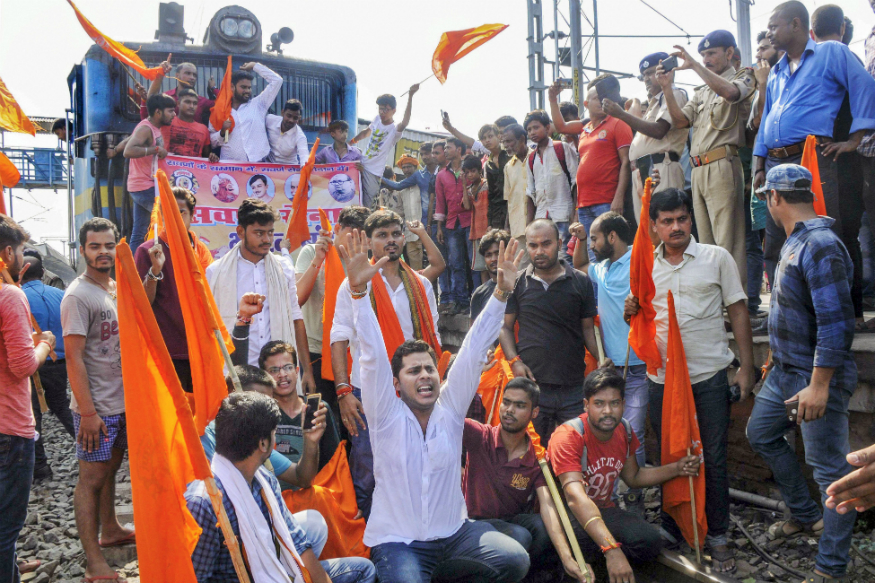
Led by Samanya Pichhara Alpsankhyak Kalyan Samaj, anti-quota outfits here on Tuesday formally launched a political outfit – Sapaks Samaj Party — months ahead of the state elections in Madhya Pradesh.

Sapaks patron Hiralal Trivedi has been declared party president while the state executive announced on Tuesday comprised four vice-presidents and other office bearers, including youth wing functionaries. The party also launched its flag on Tuesday.
The party has claimed support of 70 social organizations, including Karni Sena, Akhil Bharatiya Brahmin Mahasabha and others.
“We would soon set up our organisational structure at the district level and shortlist candidates for assembly polls,” party president Hiralal Trivedi said.

On being asked whether there would be any criteria for distribution of tickets, Trivedi said they would accept names suggested by their voters.

The party wishes to field candidates at all the 230 assembly constituencies for the upcoming assembly elections.

The organization is yet to come up with a party symbol and is awaiting an approval from the Election Commission.

Trivedi added that opposition to SC/ST Act and reservation in promotion would be among the key agendas of the new party.

Besides claiming the support of the upper caste, the party is said to have a backing of sections of OBCs, SCs and STs, which has caused some worry for the ruling Bharatiya Janata Party and opposition Congress.

After successfully organizing the September 6 Bharat Bandh and another mega protest in Bhopal on September 30, the party looks confident of garnering support among minority communities.

Sapaks was formed with the agenda to fight the BJP-led Madhya Pradesh government’s move of extending reservation in promotions. The newly formed party would also be driven by similar ideals and retired bureaucrats and ex-police officers.

MP polls may be tough battle for Shivraj Singh Chouhan, but scars of Congress misrule still fresh in people’s minds

I first heard of “Bangali Doctors” in a film on primary healthcare in South Rajasthan. It was a documentary was based on the work of a well-known Udaipur-based NGO, Seva Mandir, and produced by Abhijit Vinayak Banerjee, a renowned economist of the Massachusetts Institute of Technology. Little did I expect to encounter this term again several years later in a tribal village of Madhya Pradesh.

These “Bangali Doctors” are like German silver — neither Bengali nor doctors. They are quacks. I recall from Banerjee’s film that the original “Bangali Doctors” were half-trained paramedics. They came to came to Rajasthan from Eastern Bihar, then part of larger Bengal. Successive generations adopted the title and also brought along people from their villages over the years.

These quacks form a vital link in the healthcare chain. They are the next port of call after the village “ojha” (voodoo practitioner). Only after them comes the state primary health centre.

We were at the tiny tribal hamlet of Pandutalab in Dewas district, 70 kilometers from Indore. The Mahila Jagat Lihaaz Samiti ran a Communitarian Natural Resource Conservation in the village. It was a field centre of an NGO formed by social activist Rahul Banerjee and his wife Subhadra Khaperde.

Rahul, better known as Rahul Indori, is a civil engineer from IIT-Khargapur. He also holds a PhD in environmental planning and management. Subhadra comes from a Dalit marginal farmers’ family in Chhattisgarh’s Kanker district. She is also a grassroots social worker and activist. The couple has worked among the tribals of Madhya Pradesh on a range of subjects and thus know the lay of the land as well as the back of their hands.

Lunch was free-range desi chicken curry and a unique tribal-style okra cooked in butter milk. While devouring the food, I asked Rahul about the central government’s Ayushman Bharat scheme. I wanted to know whether he thought it would be a game-changer. He was sceptical. He thought it was likely to miss the proverbial wood for the trees.

The foundation of a successful public health programme is its primary health outreach. Most illnesses start as primary health problems. They need immediate attention, otherwise they escalate into emergencies or chronic health problems. The government-fun primary health infrastructure in rural areas is inadequate and dysfunctional. Therein lies the menace of quacks and “Bangali Doctors”.

After three terms of Shivaraj Singh Chauhan as Chief Minister of Madhya Pradesh, this was appalling. Will this lack of development work against him? The community members working in the farm are not so sure. First, a few of them understand the difference between good and poor healthcare. Caught in a time warp and lacking exposure, they accept it as their lot. What matters to them is money, and “mamaji” has showered them in cash in the recent months. Among them, the Pradhan Mantri Awas Yojna was a big hit. It is another matter that the village headman took Rs 20,000 in cash for every application cleared. Still, a roof over their head makes a world of difference.

But is this enough to secure their votes? Much depends on the selection of candidates and ground mobilisation. The Congress does have presence in the region. But like most places, it is faction ridden. While the BJP seems ahead right now, a “wave” could change this fact.

Back in Indore, given a choice between poha and sabudana khichdi, I am partial towards the latter. The best was to please an Indori, I discovered, is by saying that their sabudana is better than what they make in Pune. That puts their guard down for all tricky questions.

There are a few BJP karyakartas among my old business contacts, whom I meet on most trips to get a pulse of place. Six months ago, any question about the BJP’s chances would invite a derisive laugh. “Are you serious?” they would ask in a Vadra-esque style. Now, they are more restrained.

At first, they deflect the question towards the Lok Sabha polls, saying, “No one can stop Modi-ji.” But when pinned down to the Assembly elections in Madhya Pradesh, they say, “Malwa mein toh koi problem nahin hain (there’s no problem in Malwa).” The earlier bravado is missing. “East mein fight rahega; Malwa nikal ayega (there will be a fight in the east, but Malwa will breeeze through).”

The stress on the east and central regions are real. If they are correct, BJP president Amit Shah’s rallies in the east are on hold. The party is waiting for the “mahaul” to change. Madhya Pradesh Congress chief Kamal Nath is giving his all to these elections and will make a difference in Chindhwara and its adjoining regions.

To counter the Congress strategy, the Rashtriya Swayamsevak Sangh has stepped up its booth-level work. They have now assigned two workers at every booth to cater to 50 voters as against one booth worker earlier. While technology and digital outreach will be a force multiplier for the RSS, the Congress is not sparing any money or efforts either.

The BJP’s confidence seems to stem from two counts. First, the huge sums Chouhan has doled out under the Bhavantar Bhugtan Yojana on minimum support price (MSP). Farmers have had a good soya bean yield and reaped a double bonanza with the MSP scheme. Other minor sops, such as capping electricity bills for farmers at Rs 200, have been good draws, as well.

But not everyone is happy with “mamaji’s” generosity. The trading community that had to bear the brunt of the Goods and Services Tax believe it is their money that is funding these doles — a case of robbing “Pappu” to pay “Pidi” that they don’t like.

It is here that Congress leader Digvijaya Singh comes to the rescue of BJP loyalists. They are confident that as long as Singh is around, Congress unity is going to remain a mirage.

The highway from Indore to Ratlam is not in the best condition at the moment. Although not better than the US beltways — as Chouhan had claimed — it is still one of the best roads in the country. Having sized me up by now, the driver was quick to recall the condition of the roads during Singh’s tenure. Only for that, people should not vote for the Congress, he remonstrated. He must have suffered in those times, and the memory was still raw, I thought.

An eternal point of difference between the folks of Indore and Ratlam is the quality of the sev. Residents of Ratlam claim that their products are superior beause of the quality of the local water. I am not a sev connoisseur to be able to pass judgement, but on this trip, I found that there was divergence in their political views, as well.

On the day of my trip, a central minister was visiting the nearby towns of Alote and Taal for rallies. At both places, the towns traders called for shutters to be downed as a mark of protest, unhappy with amendment to the Scheduled Caste and Scheduled Tribe (Prevention of Atrocities) Act. The anger is swelling. If allowed to gather momentum, it will make a heavy dent in the BJP’s upper-caste vote bank.

Contrary to popular perception, Mayawati’s Bahujan Samaj Party contesting the Madhya Pradesh Assembly polls solo may benefit the Congress. It will split any gains the BJP was hoping to make with SC/ST votes. So it is a potential double whammy for the BJP that has left its most die-hard supporters flummoxed.

A couple of my old associates from Mandsaur were down. I asked them whether there was any residual strains of the riots last year. They smiled and said everyone knew the real story. Last year, there was a bumper crop of opium. According to my associates, the opium mafia had engineered the riots, which provided them cover to smuggle out the excess (undeclared) yield. The state erred in its assessment, and the situation went out of hand. “Ab sab shant hain(everything is peaceful now). With a bountiful of soya crop and MSP, there is real “bhavantar” now, they said, punning on the word to imply a change of mood.

On the way back to Indore, I stopped for a tea break at the small town of Badnawar. The shop owner we called upon was very clear about his choice — the memories of Congress misrule were still raw in his mind. He said with a lot of emotion, “Mukhiya se naraaz hain, iska matlab toh yeh nahin ki chor ke haath ghar ka chabi saup dega (We’re angry with the chief minister, but that doesn’t mean we’ll hand over the keys to our house to a thief).”

Finally, it is this sentiment that can see Modi and Chouhan through once again, but it is far from a done deal for the BJP.

BJP planning to field MPs in Chhattisgarh Assembly elections?

The Bharatiya Janata Party (BJP) is determined to make it four out of four in Chhattisgarh in the upcoming Assembly elections and if reports are to be believed, the ruling party could even field MPs in the state election. According to a report in Naidunia, the saffron party is considering candidature of five MPs for the upcoming polls and they include Ramesh Bais (Raipur), Saroj Pandey (Rajya Sabha), Lakhan Lal Sahu (Bilaspur), Kamalbhan Singh (Sarguja) and Abhishek Singh (Rajnandgaon). Citing sources, the report said Bais could be fielded from Raipur City Grameen while Pandey could get a ticket from Durg. Pandey, also the BJP’s national general secretary, has reportedly not declined to contest the Assembly elections. When asked whether she would contest from Durg MLA Arun Vora, Pandey said she has always stood by what her party has decided and there would be no exception in future either, the report added. The BJP is looking for a strong leader in Durg after the death of senior leader Hemchand Yadav in April and Pandey could be its find.

Similarly, the BJP may field Sahu from Mungeli, Kamalbhan from Ambikapur and Abhishek from Kawardha constituencies, the report added. Of these three, Mungeli and Kawardha have BJP MLAs while Ambikapur has a Congress representative. The BJP is cautious this year to replace its weaker MLAs and replace them with strong faces, even if they are MPs. The BJP is in power in the central Indian state, which was carved out of Madhya Pradesh in 2000, since 2003.

The party has embarked on Mission 65 plus in Chhattisgarh this year, a figure which they are yet to touch in their decade-and-a-half rule in the state.

Vasundhara Raje Govt Builds 50 Holy Statues Ahead of Polls, Congress Cries Vote Bank Politics

Download App For Live Updates On Rajasthan Election News:

Click Here : rajasthan512.png

Be it Rajputs and Jats or the members of camel-herding and ST/SC communities, the BJP government in Rajasthan has come up with a way to please them all before the upcoming assembly elections. A many as 50 panoramas of local religious deities, noblemen, saints and warriors — from various communities — have been built across the state.

For instance, the members of Rajasthan’s Jat community are devotees of a local deity called Veer Tejaji, and Vasundhara Raje government has built a panorama of Tejaji at Kharnal Village in Nagour district. Kharnal is the birth place of Tejaji and the devotees go there to offer prayers. The western Rajasthan, known to be a Jat-dominated area, will play a key role in determining the fate of 40 seats in the upcoming election.

For the Scheduled Caste community, the government has built a panorama of Ramdev ji, also known as Ramdev Baba, in Ramdevra Village of Jaislmer District. Ramdev Baba has a huge following among the ST/SC community.
Same is the case with the camel-herding communities Raika and Rebari, which worship Pabuji Rathore. The folk-deity’s statue and panorama have been placed in Jodhpur’s Kolu Village. Pabuji is also popular among people from the Schedule Caste.

Several historic Rajput rulers and warriors from history have also found a place in the list. A panorama of Mughal-era ruler Amar Singh Rathore, who had defied the might of Shah Jahan at the royal court in Agra, has been placed in Nagour. Amar Singh Rathore is seen as an icon of bravery and freedom by the Rajputs, another major caste in the State. Every year, the Rajput community celebrates his birth day in Nagour.

Other panoramas include those of legendary saints such as Meera Bai, Sant Ravidas and Sant Bhagat Peepa.

Accusing the Raje government of vote bank politics, state’s Congress spokeperson Archana sharma said, “The Raje government is politicising these Panoramas as caste and community symbols for vote bank politics.” But Onkar Singh Lakhawat, chairman of Rajasthan’s Heritage Promotion Board, refuted these allegations, saying the BJP is only trying to pay tribute to the unsung heroes through the panoramas.

Since cow protection has become a major issue in Rajasthan due to cases of lynching in the past, the government has portrayed local deities Veer Tejaji and Pabuji Rathore as cow vigilantes who sacrificed their lives to protect the animal.

Muslim freedom fighters have also found place in the list, in what seems like a bid to give out the message of secularism. In Alwar, which was in the news recently for a lynching incident in name of saving cows, the Raje government has erected panoramas of Hasan Khan Mewati, a freedom fighter from the Meo community.

Disclaimer: RSS has been taken from their official website.

Chhattisgarh State must have fair liquor policy: High Court

The High Court of Chhattisgarh has directed the state government to frame a new liquor procurement policy within a month, ruling in favour of Diageo and Pernod Ricard, the country’s top two distillers, which had alleged unfair practices by the government.

Last year, the Chhattisgarh government had decided that liquor sales would only be allowed through government-owned corporations. Diageo and Pernod Ricard approached the high court, complaining that the government’s wholesale and retail units were trying to drive them out of the state by favouring other suppliers and restricting their orders to minimal.

In its order the court said the choice of the consumers has to prevail. “There should be a la carte system and consumer, who is master of his choice, should be allowed to purchase according to his wishes and all the brands should be made available in the shops across the counter,” said the order passed by Justice Sanjay K Agarwal on Friday.

The new policy should ensure fairness and equality in procurement within four weeks, it said.

Analysts said the judgement may prompt top spirits makers to take legal actions to deal with similar issues in other states. Chhattisgarh is a small market with less than 2% of the overall liquor sales in the country. But some other states, including Rajasthan, Kerala, Tamil Nadu, West Bengal, Delhi and Jharkhand, too allow liquor sales only through government-owned corporations.

The Chhattisgarh High Court order also said Diageo and Pernod Ricard are being discriminated against and the state has not been able to show that they have put in place a fair and transparent policy regarding the procurement of beverage alcohol.