How Upper Caste Anger on Dalit Atrocities Act May Impact Madhya Pradesh Elections

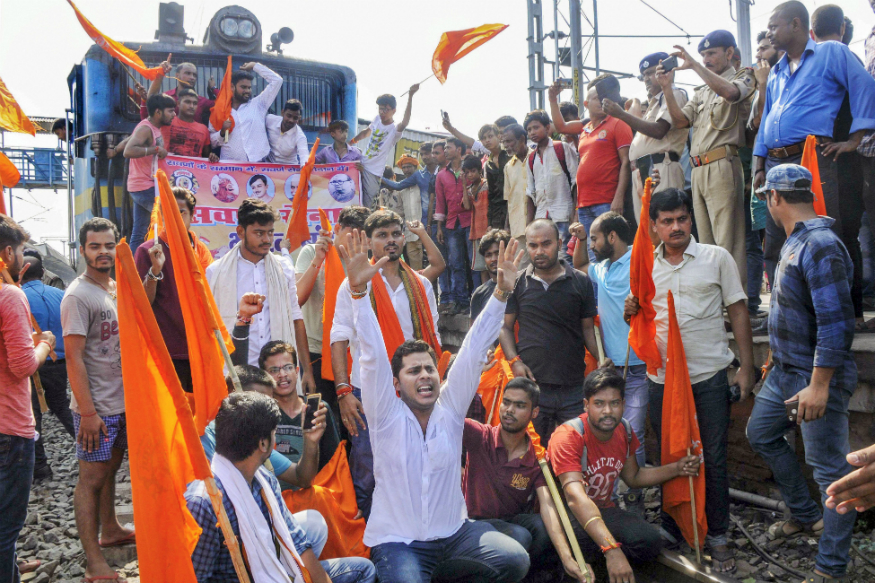
To take the case of Malwa region only, in Mandsaur, Ratlam and Ujjain lakhs of upper castes marched across towns to register their anger against the BJP, led by small, disorganised outfits like Karni Sena and Samanya Pichhda Alpsankhyak Kalyan Samaj (SAPAKS).


In September, one month after the NDA overturned the dilution in SC/ST Atrocities Act by the Supreme Court, protests led by upper castes and OBCs broke out all across Madhya Pradesh.

To take the case of Malwa region only, in Mandsaur, Ratlam and Ujjain lakhs of upper castes marched across towns to register their anger against the BJP, led by small, disorganised outfits like Karni Sena and Samanya Pichhda Alpsankhyak Kalyan Samaj (SAPAKS).
While the visible anger against the BJP, which is trying to win a fourth term in MP, has subsided, this substantial section of society, which in recent elections voted overwhelmingly in favour of the BJP, is looking to exact its ‘revenge’.

“Jab Thawarchandji [Gehlot] hamare paas aaye vote maangne, humne unse kaha ki jab aapne hamare bacchon ke baare mein nahi socha to hum aapke bacche ke baare mein kyun sochein?” says Bhairav Singh Solanki, a regional Karni Sena leader.

Union Social Justice minister Thawarchand Gehlot is facing huge backlash from the small but influential section of Rajput voters in Alote, where his son Jitendra Gehlot is fighting for a second term.

Thawarchand has been campaigning here for his son for past several days. On Monday, he welcomed UP Chief Minister Yogi Adityanath to a rally in Taal, in an attempt to assuage the popular dissent. In his speech Adityanath, who himself is a Rajput and has on several occasions talked glowingly about “Rajput pride”, talked about bringing in “Ram Rajya” and invoked “Ram Janmabhoomi”.

However the widespread anger against the government which is being seen by the upper castes and OBCs as having sided with the SC/ST community is far from over.

“Jab Supreme Court ne ek baar is Act ko sahi kar diya to fir aapko kya zarurat thi usmein ched chad karne ki? Iska seedha matlab to yahi hai ki aapko ek jaati vishesh ke hi vote chahiye. To fir unhi se vote mangiye na,” Rajpal Singh Dodia says in Alote.

Gehlot’s son has been prevented from entering several Rajput dominated villages here like Negrun, Pipliya Sisodia, Babuniya, Lasudiya. In these villages Rajputs have put up signboards asking BJP candidates to stay away. Such no-entry villages can be spotted not just in Ratlam’s Alote but across the Malwa region.

Although it may be premature to predict that the upper castes and OBC leaders are getting automatically polarised towards the Congress. “Hame yaad hai jab sansad mein SC/ST Act pe BJP sanshodhan laa rahi thi tab Digvijaya khamosh the aur Scindia Jee table baja ke uska swagat kar rahe the,” says Vijender Singh Solanki, a Raput, in Ratlam town. A lot of local journalists and businessmen too privately express similar emotions.

In some seats like Jaora and Ghatiya, upper castes have decided to show their anger against both the BJP and the Congress by supporting strong Independent candidates as well.

There are 82 reserved seats in MP’s 230 seat strong Assembly. In the rest of the seats, the upper castes and OBCs command great influence. It was perhaps with this in mind that CM Shivraj Singh Chouhan prevented release of the film Padmavati, later Padmaavat, and wrote on his official Twitter account the misuse of the SC/ST Atrocities Act will not be allowed.

Around 10 km away from Bhuda, in Mandsaur, a Rajput dominated village called Kittukheri came into limelight earlier this year, when, like several other Rajput dominated villages it put up posters saying they will vote NOTA in the upcoming elections angered by the BJP’s support to the stringent provisions of the SC/ST Atrocities Act.

“Amit Shah says in Chhattisgarh that till the BJP is in power reservation will not go. If this is the case we have clearly no future under the BJP regime,” says Dharampal Singh Rajawat.

“We all voted for Narendra Modi in 2014 because he said he will bring back black money, he will deposit money in our accounts, he will build Ram mandir. What happened to all those promises? If they can ban currency notes why can they not build Ram mandir?” asks Upender Singh.

“And what happened to the Kashmir problem? At least 40-45 people from our village are working in the Army most of who are posted in Kashmir. Does Modi think that Rajputs are born only to be posted on the border and die? We were also part of the Kisan andolan in Mandsaur last year we saw what their police did to our farmers,” says Karu Singh Hada.

There are around 7,000 Rajput votes spread across Kittukheri, Munderi, Borkheri, Band Pipliya, Jarha and Aakli—nearby Rajputv villages. Locals here say that they’ll do whatever the leaders of Karin Sena ask them to do. “We are not allowing BJP leaders or workers inside our villages. Only Congress people are being allowed and only on the condition that they give us in writing all that they’re planning to give us. So on the voting day we will decide between the Congress and NOTA,” Rajawat adds.

The BJP candidates did not win by a huge margin in 2013, Rajawat further adds. “Even if they lose just 50 voters per village, compared to last time, the BJP will be routed from here. Last time there were 2 families supporting the Congress and eight supporting the BJP. The situation this time could be exact reverse.”

In some sense though, the BJP is suffering a unique, mostly silent anger not just from the upper castes and OBCs but from the SC/ST community as well.

“Look how they treated Chandrashekhar [leader of Bhim Army]. The BJP talks in our favour but have they ever appointed a senior party functionary from our caste? Neither has the Congress actually, but over the past few years one thing we have realised is that “Jai Shri Ram” and “Jai Bheem” don’t go together,” says Vinod Parihar, a local Bhim army leader in Alote.

There is a widespread polarisation of Dalit voters here because cases of atrocities against Dalits are more frequently reported. Dalit grooms who take out their wedding processions are regularly attacked and in some cases not allowed to sit and eat with upper castes. Recently, a Dalit groom went to his wedding wearing a helmet. His photo became popular on social media.

Parihar says that since Dalit parties are not strong in this region, the Dalits have decided to support the the Congress to defeat the BJP.

Upper caste anger against the SC/ST Atrocities Act is also bringing some other smaller players like SAPAKS (Saamanya Picchada Alpsankhyank Kalyan Samaj Sanstha) into the folds of regional politics.

A local journalist who has been reporting on regional politics here says the whole district was chock-a-block with people. “Even national parties here haven’t been able to gather as many people here as this small outfit did. They got huge traction. Which is why being a party focused on upper castes, it is a threat both to the Congress and the BJP.”

Sunil Bansal was a local BJP leader who has now joined SAPAKS that became a political outfit in October this year. He goes from door to door asking for votes but without much fanfare. “My party is batting for the rights of 78% people who suffer from the SC/ST Act and reservation politics. My constituency is the government servants and you don’t find people around me because I’ve told them, for their own good, to sit quietly. We will emerge as the kingmakers here, you’ll see,” Bansal says.

Meanwhile, the RSS is also in full swing here, quietly carrying out a door-to-door campaign while calling it a voter awareness drive.

“There are a couple of things worth noting. After three successive terms of the BJP, people worry about the consequences which is why even those who are fed up of the BJP don’t want to say it overtly, fearing consequences if it comes to power again. Secondly, the RSS we have seen kicking in just 4-5 days before elections. But this time they started their work almost a fortnight ago,” says the local journalist.


Note: RSS Feeds taken from Respective Websites.
Rajasthan Assembly 2018: Hate crimes against Dalits and Muslims a major concern in the state

Last year, 55-year-old Pehlu Khan was lynched on a national highway in Alwar district by a furious mob on the suspicion of cow smuggling. The Rajasthan police acquitted six of the accused of Khan’s murder, while the victims were charged for cow smuggling.


Hate crimes have stained the map of Rajasthan through the sands of time. In the last couple of years, however, hate crimes have been on the rise in the state.

In July this year, Amnesty International, a human rights advocacy group, ranked Rajasthan at number three for the largest number of heinous crimes against minority communities. According to the list, the largest number of hate crimes happened in Uttar Pradesh followed by Gujarat.

Amnesty International's Halt the Hate website counts at least 39 cases of hate crime across Rajasthan from mid 2015 to mid 2018. (Image: Amnesty International Website)

This came in the wake of the brutal lynching of Rakbar Khan on the suspicion of cow smuggling. Khan, a resident of Mewat in Rajasthan, was transporting bovines when they were stopped by locals in Lalawandi village near Alwar, and brutally beaten. The case has been deputed to DSP Jaipur range and the investigation is on.

However, this is not a one-off case. This is one gruesome deed in a series of others, several of which might not have even been reported. Amnesty’s Halt the Hate website lists such cases and marked eight hate crimes in 2018 until July. These include a Dalit groom who was attacked by upper caste men for riding a horse, and a Muslim man who was beaten to death for not chanting “Jai Shree Ram”.

Rajasthan has seen at least 39 such incidents from September 2015 until present day. In fact, it was in 1992 that the state witnessed its first incident of violence against minorities – the Kumher Massacre – where 15 Dalits were killed in Bharatpur district.

Then, in September 2010, Hindu activists mainly belonging to the Meena tribe attacked Muslims, destroyed their property – their farmland, equipment, standing crop and granaries, were plundered, damaged or burnt. Muslims had to flee Udaipur in the aftermath of the incident.

To cite more recent examples, last year, 55-year-old Pehlu Khan was lynched on a national highway in Alwar district by a furious mob on the suspicion of cow smuggling. The Rajasthan police acquitted six of the accused of Khan’s murder, and the victims were charged for cow smuggling.

In yet another horrendous hate crime, Mohammed Afrazul, a migrant labourer from Malda in West Bengal, was hacked and burnt alive by one Shambhu Lal in Rajsamand district of Rajasthan. Shambhu Lal’s minor nephew caught the entire incident on tape and video footage of the ghastly crime went viral. Lal confessed to committing the crime in an attempt to prevent jihad and surrendered the next day. He was charged with murder.

In fact, in an incident, the Rajasthan police gunned down Talim Hussain in Alwar on the December of 2017 on the suspicion of cow smuggling. Although the state police claim it to be an encounter, activists say they didn’t find any evidence of counter-firing from the alleged cow-smugglers.

Rajasthan-in-Red

These incidents paint a grim picture of lawlessness in Rajasthan. Activists and minority leaders have accused the government of apathy and even shielding the perpetrators of such crimes.

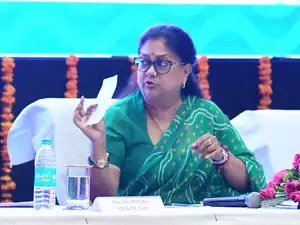
Pinning the blame on “population explosion and frustration due to joblessness” Rajasthan Chief Minister Vasundhara Raje said, “It happens all over the world, that’s not something happening in Rajasthan alone and if somebody is trying to say that why wasn’t she listening and why wasn’t she doing anything… it is very difficult because if at 12’o clock in the night in some remote part of Rajasthan, something like this happens, I would have to be god to know exactly what is really happening.”

The ruling BJP government will have to tread a tightrope in order to woo the minorities who clearly seem disenchanted with the ruling dispensation. Otherwise, they might hand a point to the Opposition in the state.


Disclaimer: RSS has been taken from their official website.

Rajasthan Polls 2018: Will BJP be able to overcome the deep-rooted resentment by Dalits?

According to the 2016 NCRB report, Rajasthan accounts for the third-highest number of crimes involving atrocities against the Scheduled Castes (SCs) and Scheduled Tribes (STs), with Jaipur accounting for more than half the number of such crimes in metropolitan cities.

An interesting statistic that came out of that report was that Rajasthan was the only state that disposed of 38 such cases using the method of plea bargaining. A total of 1,063 cases were disposed of by the Rajasthan police in 2016 for want of evidence.

This is not the only indicator of the growing resentment that the Dalit community has against the ruling BJP government in the state.

Earlier this year, the Supreme Court had read down the SC/ST (Prevention of Atrocities) Act, saying a preliminary inquiry would be conducted before registering an FIR against alleged perpetrators and that the accused will now have a right to seek anticipatory bail. This enraged the Dalits, triggering mass protests across the country.

The tremendous anger in the Dalit community of Rajasthan was mobilized into aggressive protests on April 2 and nationwide bandhs. According to The Caravan, 311 FIRs were filed against people belonging to the SC/ST community after April 2, and none of them have been withdrawn.

People belonging to the Dalit community shout slogans as they take part in a nationwide bandh called by several Dalit organisations, in Kasba Bonli, in Rajasthan, on April 2, 2018. (Image: Reuters)

The incident may have reminded the community of the Dangawas violence of 2014. In May 2014, there was a dispute between the Meghwals (belonging to Scheduled Caste) and the Jats over a 15-acre plot of land in the Dangawas village of Nagaur district. The dispute escalated quickly into a violent altercation, killing five Dalits, who claimed to be the caretakers of that land.

At that time, Meghwals ran from pillar to post seeking justice, but in vain. In fact, 16 of the 32 MLAs of seats reserved for SCs are Meghwals. Yet, none of them allegedly lent their support to the community at that time, including the MLA of Dangawas.

Rajasthan’s Dalits comprise around 18 percent of the total population, out of which Meghwals constitute more than 50 percent. The Meghwals are concentrated in the central and western part of the state.

Meanwhile, the other half of the Dalit community comprises the Bairwas, the Raigars, and the Jatavs who are concentrated in the eastern districts that border Uttar Pradesh. Besides, more than 20 percent of the community is urban and comprises the entrepreneurial Khatiqs, the Valmiki and the Jingar sub-castes.

Amongst these, Meghwals have been the most vocal about their exasperation with the ruling dispensation, and are most likely to vote for the Congress. The voting patterns of the Jatavs is similar to that of their counterparts in Uttar Pradesh and they are likely to vote for Mayawati’s Bahujan Samaj Party. While the urban Dalits are more inclined towards the saffron party, the Bairwas are torn between the Congress and the BJP.

The BJP, it seems, has taken cognizance of the issue and is treading on the path of course correction. As a part of their outreach programme, the Vasundhara Raje-led BJP government announced a loan waiver amounting to Rs 114 crore in September this year.

However, the Dalits are piqued with their scanty representation in the higher judiciary and education sector, and the saffron party will have to work really hard to earn back the Dalit vote.


Disclaimer: RSS has been taken from their official website.

70 Anti-Quota Outfits Form Party in Poll-bound Madhya Pradesh, to Contest All 230 Seats

The newly formed party has claimed support of 70 social organizations, including Karni Sena, Akhil Bharatiya Brahmin Mahasabha and others.

Led by Samanya Pichhara Alpsankhyak Kalyan Samaj, anti-quota outfits here on Tuesday formally launched a political outfit – Sapaks Samaj Party — months ahead of the state elections in Madhya Pradesh.

Sapaks patron Hiralal Trivedi has been declared party president while the state executive announced on Tuesday comprised four vice-presidents and other office bearers, including youth wing functionaries. The party also launched its flag on Tuesday.
The party has claimed support of 70 social organizations, including Karni Sena, Akhil Bharatiya Brahmin Mahasabha and others.
“We would soon set up our organisational structure at the district level and shortlist candidates for assembly polls,” party president Hiralal Trivedi said.

On being asked whether there would be any criteria for distribution of tickets, Trivedi said they would accept names suggested by their voters.

The party wishes to field candidates at all the 230 assembly constituencies for the upcoming assembly elections.

The organization is yet to come up with a party symbol and is awaiting an approval from the Election Commission.

Trivedi added that opposition to SC/ST Act and reservation in promotion would be among the key agendas of the new party.

Besides claiming the support of the upper caste, the party is said to have a backing of sections of OBCs, SCs and STs, which has caused some worry for the ruling Bharatiya Janata Party and opposition Congress.

After successfully organizing the September 6 Bharat Bandh and another mega protest in Bhopal on September 30, the party looks confident of garnering support among minority communities.

Sapaks was formed with the agenda to fight the BJP-led Madhya Pradesh government’s move of extending reservation in promotions. The newly formed party would also be driven by similar ideals and retired bureaucrats and ex-police officers.