Nitin Gadkari confident of BJP forming govt in Chhattisgarh, MP & Rajasthan

Road Transport and Highways Minister Nitin Gadkari on Wednesday exude 100 percent confidence that the Bharatiya Janata Party (BJP) will form its government in the current elections in Chhattisgarh, Madhya Pradesh and Rajasthan. While talking about what the BJP government has done and it is doing for the development of Rajasthan, Nitin Gadkari said, “I have toured Chhattisgarh, Madhya Pradesh and Rajasthan and I am very confident that the BJP will form the Government again in all three states with majority.”

MP polls: Rajnath Singh takes dig at Congress manifesto; says party ‘holding on to cow’s tail’ for survival in state

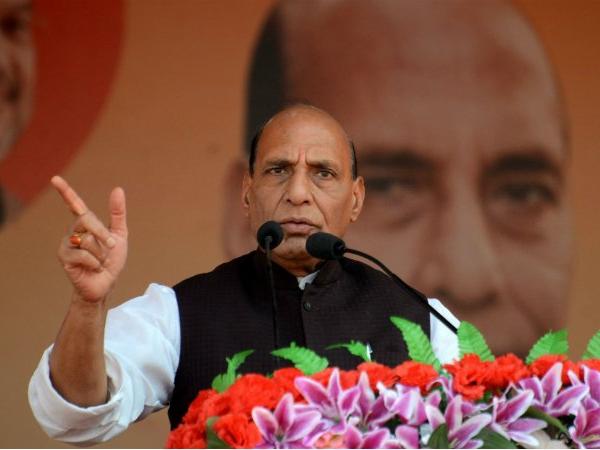
Union home minister Rajnath Singh said on Sunday that the Congress in Madhya Pradesh has now latched onto the cow for its survival.

The Congress, in its manifesto for the 28 November Assembly elections, has promised to build cow shelters across the state.

“Congress leaders are now doing temple-hopping as they know that the party cannot achieve anything on its own. They are kneeling before God and holding onto cow’s feet,” Singh said, addressing campaign rallies in Sagar, Morena and Gwalior region. They are holding on to the cow’s tail and promising to build shelter homes for cows,” he said.

“For us (the ruling BJP) cow is not an election issue. Temple and cow are crucial parts of our culture,” he added.

Saying that chief minister Shivraj Singh Chouhan is the first choice of people, the senior BJP leader alleged that the “Congress does not like him as he is born in a simple family.”

The opposition party is yet to choose its chief ministerial candidate while the BJP has renominated Chouhan, Singh said.

When he campaigned in the state during 2003 elections, “there was darkness under the regime of then chief minister Digvijay Singh, now there is brightness (electricity) in each household,” he said.

Under the Congress rule from 1993-2003, agricultural grown rate of the state was three percent, which has now soared to 20 percent, while the per capita income has risen to Rs 80,000 from Rs 15,000, the Union minister said.


Disclaimer: RSS has been taken from their official website.

Madhya Pradesh, Rajasthan victories needed to cement alliance with NCP : Congress

The Congress and the Nationalist Congress Party (NCP) have made substantial progress in their discussions about seat-sharing in Maharashtra for the 2019 Lok Sabha election, reaching an agreement on 40 out of 48 seats in the state, but Congress leaders said the prospective alliance would depend to a great extent on the outcome of the upcoming assembly elections in Madhya Pradesh, Rajasthan and Chhattisgarh.

“At least Madhya Pradesh and Rajasthan should go our way. Only then we can be sure that the NCP will shed its ambiguous position towards the BJP. If the results don’t go in our favour, then the NCP can be unpredictable,” said a Congress leader, who did not wish to be identified.

Congress leaders said that they had reason to be apprehensive about the NCP’s stance given NCP chief Sharad Pawar’s recent comments in an interview seemingly absolving prime minister Narendra Modi in the controversy over the Rafale aircraft deal by claiming that “people did not doubt Modi’s intentions”. BJP chief Amit Shah, they said, had seized on the remark and asked Congress president Rahul Gandhi to take a lesson from it.
“The NCP being unpredictable is public knowledge. They unanimously called off an alliance with us for the Maharashtra assembly polls after coming to know that Modi had come to power,” said the Congress leader. “Then they announced support for a BJP government in Maharashtra even when the latter had not asked for support. They claimed that they were doing so because they didn’t want the government to fall quickly as the state could not afford elections.” The president of the NCP’s Maharashtra unit, Jayant Patil, remained unavailable for comments despite several calls and a message sent to his phone.

Congress leaders said that the NCP had a pattern of switching sides on flimsy grounds or for reasons that made little political sense. For instance, in the 2007 Mumbai civic polls, the NCP had helped the Shiv Sena-BJP combine by deciding to break the alliance with the Congress over one seat, said a Congress leader.


Disclaimer: RSS has been taken from their official website.

MP Assembly Polls 2018: Vajpayee’s nephew in BJP’s second list of 17 candidates

The second list was released in New Delhi by Union Minister J P Nadda, who is also secretary of the BJP’s Central Election Committee.


The BJP on November 5 declared its second list of 17 candidates for the November 28 assembly polls in Madhya Pradesh, fielding Lok Sabha member Anoop Mishra, who is the nephew of former prime minister Atal Bihari Vajpayee, and two women nominees.

With this, the ruling party has so far announced 194 candidates in the state, which has a total of 230 assembly seats. The first list was released last November 2.

The second list was released in New Delhi by Union Minister J P Nadda, who is also secretary of the BJP’s Central Election Committee.

Mishra, the Lok Sabha MP from Morena, will contest from Bhitarwar in Gwalior district. He had unsuccessfully fought the 2013 assembly polls from the same constituency.

In 2014, he won from the Morena Lok Sabha seat.

The BJP has fielded Nirmala Bhuriya, daughter of former MP and tribal leader Dilip Singh Bhuriya, from Petlawad (ST) in Jhabua district.

In 2015, she had lost the bypoll from Jhabua-Ratlam Lok Sabha constituency, which fell vacant following the death of her father.

The second woman in the list, Leena Jain, has been nominated from Basoda in Vidisha district.

The list also contains the names of some sitting MLAs, including Sharad Jain (Jabalpur North), who is also a minister.


Disclaimer: RSS has been taken from their official website.

Weeks Ahead Of MP Elections, Congress Hits A Roadblock With Ally

Congress has been winning this seat since 1972, except losing it only twice- in 1990 assembly elections and 2012 bypoll.

An Assembly constituency in Dhar district of Madhya Pradesh has become a bone of contention between the Congress and Jai Adivasi Yuva Shakti (JAYS), a fledgling tribal political outfit, which are currently engaged in alliance talks for the next month’s state polls.

The seat sharing talks between them have apparently hit a roadblock, as both are keen on contesting election from Kukshi seat in western MP, currently held by the Congress.

The JAYS wants to field its candidate from Kukshi, although the Congress says it does not want to part with this seat as it has been its traditional stronghold. The opposition party has been winning this seat since 1972, except losing it only twice- in 1990 assembly elections and 2012 bypoll.

Talking to PTI on Friday, JAYS convener Dr Hiralal Alawa said, “Our seat-sharing talks with the Congress are underway. We want to contest the upcoming election from 40 assembly constituencies. Fighting from Kukshi due to our strong presence there is top on our agenda.”

Another JAYS leader said, “We have categorically told the Congress that we want to contest from Kukshi. The fate of alliance depends on this seat. If the Congress is adamant for this seat, then the alliance talks might even fail.”

“We have already demonstrated our strength in Kukshi by organising Kisan Panchayat programme held on October 2. Over one lakh tribal youths had taken part in the event,” he added.

Kukshi seat is currently held by Congress’ Surendra Singh Baghel, a supporter of senior party leader Digvijay Singh.

Baghel said he was all set to contest the upcoming polls from this seat, and also expressed confidence that he would win it with a huge margin.

Another Congress leader said, “Kukshi is our traditional seat and we can’t let it go so easily.”

The JAYS has made its presence felt in 22 tribal seats spread across Alirajpur, Ratlam, Jhabua, Dhar, Khargone, Burhanpur, Khandwa, Dewas and Barwani districts in Malwa-Nimar region of western MP, which has a sizable tribal population.

Of these 22 constituencies reserved for tribals, the Congress currently holds five seats.

The state leadership of the Congress is keen on joining hands with the JAYS in Malwa-Nimar region that comprises 66 assembly seats. The Congress does not have a strong presence in this region. Currently, the Congress only has nine MLAs as against the ruling BJP’s 56 legislators in the region.

Besides, this time the Congress is treading cautiously as it seems to have learnt a lesson from its disastrous defeat in the 2003 state elections when a tribal political outfit Gondwana Gantantra Party (GGP) in eastern MP had eaten into its vote bank.

Although the GGP managed to win only three seats in eastern MP in 2003, it had nibbled into a major share of the Congress’ traditional tribal vote bank. The GGP had won

5,17,270 votes, especially in the tribal-dominated areas.

The Congress had managed to win only 38 assembly seats out of all the 230 constituencies in the state, whereas the BJP had won 173 seats in the 2003 polls.

The opposition party, which has been out of power in MP since the last 15 years, had earlier tried to stitch an alliance with the BSP for the upcoming elections, although it failed to work out.


Disclaimer: RSS has been taken from their official website.

MP Assembly Elections 2018: Key factors likely to impact the election

CM Shivraj Singh Chouhan’s government has been facing ire of upper-caste protesters, agitating farmers and is surfing against a tide of anti-incumbency.


Madhya Pradesh is scheduled to vote on November 28. The polls are expected to witness a tough contest between the incumbent Bharatiya Janata Party (BJP) and the Indian National Congress.

The BJP government led by Chief Minister Shivraj Singh Chouhan is facing an anti-incumbency sentiment to some extent after being in power for 15 years. Chouhan has held the top office for 13 out of the 15 years.

MP will head to polling in a single-phase election, and the tenure of the current Assembly will end on January 7, 2019.

The counting of votes will happen on December 11 along with Chhattisgarh, Mizoram, Rajasthan and Telangana.

Here’s are some of the key issues likely to impact the elections:

Anti-incumbency

While Chouhan remains popular and has maintained his ‘vikas purush’ image even after being the chief minister for 13 years, reports suggests that significant fatigue against the government has crept in.

In a state where the politics has been largely binary between the BJP and the Congress, a tide of voters seeking change of guard would be difficult for Chouhan to overturn.

Data from past assembly polls suggests that a large swing of votes is possible in the state. Such instances have occurred in the past, including in 2003 when the BJP stormed to power.

Upper-caste voters

In September, multiple districts across the state observed a complete shutdown in support of protests called by various upper caste outfits against amendments to the SC/ST Prevention of Atrocities (POA) Act passed by Parliament in July.

The protests were called by upper-caste outfits including the new SAPAKS party, Rajput Karni Sena, among others.

Reports suggests that the upper-caste voters, who have traditionally supported the BJP in the state, may be drifting the other way.

Fearing this, a senior BJP leader sent an “SOS” to the party’s central command, seeking “impact creating” corrective measures “urgently”, according to a report by The Asian Age.

The leader said the party had to take measures to prevent backlash from upper-caste voters.

“The anger among the ‘savarnas’ (upper castes) is too deep-rooted to be contained by any small measures. It has to be big impact-making steps by the Centre to prevent them from landing in the fold of Congress out of vengeance,” a senior Madhya Pradesh BJP leader had told the newspaper.

Unemployment

The issue of rising unemployment continues to plague the Chouhan government, like most states in India.

According to data from the Labour Ministry, Madhya Pradesh had an unemployment rate of 40 percent in urban areas and 44 percent in rural areas in 2015-16. The overall unemployment rate was around 43 percent.

Chouhan’s government has come under fire for lack of job creation. The opposition has also targeted the BJP government over this issue and has been promising speedy creation of jobs, if elected.

Mandsaur and the farmer agitation

On June 6, 2017, police in Mandsaur fired at protesters who were demanding better prices for their harvest. Six protesters were killed in the police firing, leading to violent protests that spread to neighbouring districts. A day later, a local factory was torched by protesters.

The protests forced the Chouhan government to launch the Bhavantar Bhugtan Yojana (BBY) in October 2017, under which registered farmers would be paid the difference between the minimum support price (MSP) and a modal price. The amount would be calculated by taking into consideration the average price of a crop in the state and two neighbouring states.

Congress President Rahul Gandhi was denied permission by the administration to meet the farmers. This, coupled with the death of six farmers, created a positive image for the Congress and a negative image for Chouhan’s government, political observers suggest.

To mark the first anniversary of the farmer protests, Gandhi staged a rally in Mandsaur on June 6 this year. In what was seen as a virtual election campaign launch for the party, Gandhi attacked the BJP governments at the Centre and the state.

Chouhan’s popularity

Congress has also been trying to play the ‘soft Hindutva’ card by undertaking a Ram Van Gaman Path yatra and the party constantly portraying Congress President Rahul Gandhi has a ‘Shiv bhakt’ during road shows and public meetings. Congress, however, denies playing such a card.

Despite such attempts by the Congress, many believe that the election will not be fought on religious or social issues. The BJP believes people would vote on the basis of development work undertaken by the Chouhan government and its successes in the state over the last 15 years.

Other suggests the election will revolve around a central factor — if people will vote for or against Chouhan.

Despite being the chief minister for 13 years, Chouhan remains a highly popular candidate.


Disclaimer: RSS has been taken from their official website.

Madhya Pradesh elections a test of BJP popularity vs Congress resurgence.

The ruling BJP’s broad-based support in Madhya Pradesh shows signs of waning, but it is not clear whether the Congress can capitalize


Madhya Pradesh lies at the heart of India and will soon be at the heart of the nation’s politics. Next month’s assembly elections in the state will give the first indication on whether the ruling Bharatiya Janata Party’s (BJP) popularity endures or if a Congress resurgence is imminent.

BJP has dominated the state’s polity over the past several years. This dominance was on display in the last MP elections in 2013 when it secured 45% of all votes—the highest in the state for nearly 30 years—and 72% of seats in the state. BJP’s vote share was 9 percentage points higher than Congress’s (36%) but it was far more successful in converting votes into seats. For every seat won, the BJP needed 92,069 votes, less than half of the Congress figure of 212,332.

BJP also had higher victory margins on average. Of the 165 constituencies it won in the 230-member assembly, the BJP had a victory margin greater than 10% in 92 constituencies. In contrast, the Congress won only 17 of the 58 constituencies with a victory margin greater than 10%. BJP’s victories were equally decisive in reserved and unreserved constituencies.

In Madhya Pradesh, scheduled tribes (STs) account for 21% of the population (compared with 9% of India’s population) and have 47 seats reserved for them.

In 2013, the BJP secured 31 of the 47 seats and, even in overwhelmingly tribal constituencies (more than 80% tribal population), the party registered significant victories.

One reason for this success could be proactive grassroots work in tribal areas by socio-religious affiliates of the Sangh Parivar. In a 2008 research paper, political scientists Tariq Thachil and Ronald Herring attributed BJP’s success in tribal strongholds across India to the Sangh Parivar’s efforts in providing critical social services in tribal pockets. These activities have not just increased BJP’s popularity but also promoted Hindu identity in these areas.

The growth of Hindu identity in a predominantly Hindu state (91% of the state’s population) could explain why both the BJP and Congress have made public displays of their Hindu credentials a central part of their campaigns.

However, recent events could threaten BJP’s prospects in tribal-dominated constituencies and elsewhere. The controversy over the Scheduled Caste and Scheduled Tribe (Prevention of Atrocities Act) and the differing stances of BJP leaders on the issue have opened a chasm between tribal voters and upper caste voters, as a previous Plain Facts column pointed out. While tribal voters seem to be dissatisfied with the government’s handling of atrocities against the marginalized communities, the BJP’s core upper caste vote bank seems to feel that the government is pandering to tribal and Dalit interest by refusing to dilute the Atrocities Act. Data from post-poll surveys conducted by Lokniti-CSDS suggests that a large majority of upper caste voters support the BJP in Madhya Pradesh, as in other parts of the country. Restiveness among them signals trouble for the party.

The other threat to the BJP in Madhya Pradesh is agrarian distress in a predominantly agrarian state. While farmers have traditionally supported BJP, pressures on income have led to agrarian riots in recent years.

The political impact of this discontent could be felt more in poorer districts where BJP has enjoyed relatively less support. Using Mint’s district wealth tracker, we find that the BJP’s vote share in the 10 poorest districts of the state was considerably lower at 39% compared with 50% in the 10 richest (more urban) districts.

The combination of farmer protests, SC/ST tensions, and general anti-incumbency sentiment towards a party that has been in power for the past 15 years, in theory, offers hope to the Congress. However, the Congress in Madhya Pradesh has been marred by factionalism. In a 2014 research paper, Shreyas Sardesai of Lokniti-CSDS attributed the party’s disastrous showing in 2013 to factionalism. A united front with a focus on improving their poor votes-to-seat ratio could revive Congress fortunes in the state and the country.

For the BJP, another resounding victory could cement its status as the dominant party in the Hindi belt and boost the morale of party loyalists ahead of 2019. For chief minister Shivraj Singh Chouhan, a fourth term in power could also mean a bigger role in national politics in the years to come.


Disclaimer: RSS has been taken from their official website.

MP polls: BJP might not give tickets to 70-80 MLAs

The ruling BJP is thinking of not giving tickets to 70-80 MLAs, including some ministers, for the forthcoming Assembly polls in order to tide over anti-incumbency, a party leader said Friday.

Assembly polls in the state are scheduled for November 28 and counting of votes will take place on December 11.

“The party is seriously toying with the idea of not giving tickets to 70-80 MLAs and ministers,” a state BJP leader told PTI Friday.

He added that the ruling BJP came up with this idea following reports of public outrage against some MLAs.

Party sources said that MP Chief Minister Shivraj Singh Chouhan, who has been touring the state as part of his Jan Ashirwad Yatra, was receiving complaints about non-performing MLAs.

Besides, a recent opinion poll, which showed the Congress returning to power in MP after a gap of 15 years, has also prompted the BJP to set its house in order, they said.

“There is public outrage against some MLAs but not against Chief Minister Chouhan, who still remains popular with the masses,” a Bharatiya Janta Yuva Morcha (BJYM) functionary said.

He said that the BJP stood a good chance of retaining power if new faces are given a chance.

The BJP, in the 2013 Assembly polls, had given about 25 per cent tickets to new faces and 75 per cent of them emerged victorious.

In the 2013 Assembly polls, the BJP had won 165 seats in the 230-member House. The Congress got 58 seats, the BSP four and one seat was won by an Independent.


Disclaimer: RSS has been taken from their official website.

From farm to caste, the issues that matter in the 2018 Madhya Pradesh elections

A group of protestors turned up at the Gwalior residence of Union minister Narendra Singh Tomar on September 2 and raised slogans against a central ordinance to restore provisions of the Scheduled Castes And Scheduled Tribes (Prevention Of Atrocities) Act, that had been struck down by the Supreme Court on March 20.

Madhya Pradesh minister Maya Singh confronted a separate group of protestors during a programme on the campus of Jiwaji University in the same city. Union ministers Thawar Chand Gehlot and MJ Akbar, too, were shown black flags in Guna and Vidisha, respectively. Eighteen days later, chief minister Shivraj Singh Chouhan sent out a tweet, “There will be no misuse of SC/ST act in Madhya Pradesh, no arrest without probe.”

A senior minister in Delhi said, “There is a sense of unease among upper castes. It is natural for any chief minister to address the issue when election is round the corner.”The amended law restored the power of police to immediately arrest a person committing an offence under the law and denied anticipatory bail to a person accused of such an offence.

A rough estimate pegs the proportion of the upper caste population in Madhya Pradesh at 22% — a size large enough to upset poll calculations of the BJP and the Congress.

The dynamics

The mobilisation of upper caste government workers started in Madhya Pradesh after Chouhan attended a conference of AJAKS — an umbrella organisation of SC/ST employees — in June 2016 and declared “koi mai ka lal aarakshan khatm nahi kar sakta” (no one dare end reservation). The state government subsequently challenged, in the Supreme Court, a Jabalpur high court order against reservation in promotion. It led to formation of SAPAKS — an organisation of employees from the general, other backward classes (OBCs) and minority communities.

The SCs and STs account for about 36% of Madhya Pradesh’s population. The BJP won 28 out of 35 assembly constituencies reserved for SCs, and 31 out of 47 seats reserved for the STs in 2013.

“The SC and ST population realises that the Congress failed to do justice to them,” BJP’s Rajya Sabha MP Prabhat Jha said. “The upper castes too know that only BJP can protect their interest.” Jha’s confidence notwithstanding, the party is worried about the political fallout of the controversy. “Whether this issue will inflict damage or not, we do not know. It certainly is not going to help our case,” a BJP MP from the state said, requesting that he not be identified. “The issue has blown up at a wrong time.”

Chouhan is conscious of the problem. He is on a whirlwind tour of the state, and in most of his public meetings, he doesn’t forget to mention that Madhya Pradesh is an “island of peace” and that the status should not be altered. Chouhan returned to power in 2013 with 45.7% vote share and 165 seats. Any slip in support among the SC/ST and the other blocs comprising the upper caste and the backward classes could be detrimental for him.

Farm crisis

Sitting at a dhaba in Astha, on the BhopalIndore highway, Bhupesh Patel glances through local newspapers. He grows soya bean in his farm and makes a marginal profit.

“Our condition is not as bad as onion growers in Mandsaur. They deal with falling profit, low credit flow, and many other issues,” he said. Mandsaur was the epicenter of the farm protest in 2017 in which six farmers were killed in police firing. On June 1 that year, farmers in the state startedapeacefulprotest,demandingloan waivers and better crop prices. Five days later, the situation turned violent and the police opened fire to control the mob.

Rahul Gandhi has promised a farm loan waiver if Congress is elected to rule Madhya Pradesh and there is some panic in the BJP.

“We will have to make extra efforts to assuage their hurt feelings,” a minister in the BJP government said. Congress’ Shobha Oza says, “The farmers are not going to forgive Chouhan for opening fire on them.” Chouhan insists that the farmers are still with him. “I had held a public meeting just a few days at Pipliya Mandi, in Mandsaur, the epicenter of that incident, and people came in large numbers to support me. Farmers are with me,” he insists.

Other issues

The government’s economic survey this year revealed there were 1.12 million registered educated unemployed people in MP by the end of 2016. Only 422 got employment by 2017.

“Since the first investors summit in Khajuraho in 2007, not a single major industrial unit has come up in Madhya Pradesh,” claims Congress spokesman Pankaj Chaturvedi.

Madhya Pradesh (1,823 cases) reported the highest number of cases of atrocities against STs, accounting for 27.8% followed by Rajasthan with 18.2% (1,195 cases) and Odisha with 10.4% (681 cases) during 2016. Madhya Pradesh tops the list with 4,882 cases of rapes reported in 2016 alone, the National Crime Records Bureau data shows.

Congress leaders also allege malnutrition among children is a matter of concern. The Madhya Pradesh government accepted in the state assembly last year that 28,948 children had died in one year alone, but denied that each death was because of malnutrition.

Chouhan has tried to tide over all these issues with a flagship Sambhal scheme of power at ~ 200 per month, and other government schemes. It aims to cover more than 20 million people.

The anti-incumbency

About two dozen people this reporter spoke to in a few districts of Madhya Pradesh for this story, rate Shivraj Singh Chouhan as a better chief minister than his immediate predecessors from the BJP and the Congress.

Better roads, improved power supply and different social welfare schemes work in Chouhan’s favour.

But a majority of them complain about local MLAs. BJP president Amit Shah told the Madhya Pradesh unit recently that he will not shy away from changing candidates if internal feedback and independent survey turn out to be negative.A clear leadership is working to the BJP’s advantage but it is also battling 15 years of anti-incumbency.

The resurgence in the Congress poses a challenge to Chouhan, but the BJP is organisationally better prepared for the election. The balance is evenly poised — at the moment.


Disclaimer: RSS has been taken from their official website.

MP polls: Illegal infiltrators took away jobs of our youths, says Amit Shah

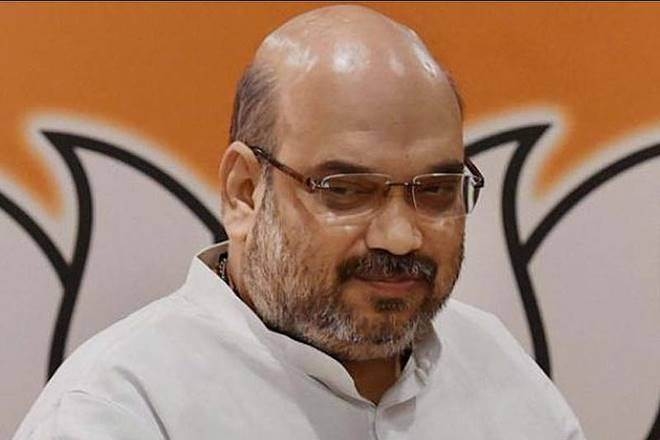
BJP president Amit Shah on Tuesday said that “illegal infiltrators” took away jobs of youths in the country, and alleged that Congress chief Rahul Gandhi and other opposition parties had opposed the National Register of Citizens (NRC) when 40 lakh such settlers were identified under the exercise.

The BJP governments will “drive each and every infiltrator out of the country” after winning elections in 2018 and 2019, Shah said. Calling Rahul “Shaikh Chilli” (a simpleton), Shah said he should “stop daydreaming” about forming a government in Madhya Pradesh, where the BJP has taken root.

Shah was addressing a convention in Shivpuri, part of the erstwhile Scindia kingdom. He later took out a road show in Guna, which is represented by Congress campaign committee chief Jyotiraditya Scindia in the Lok Sabha. The BJP chief said that besides development, the most important aspect of the Narendra Modi government was creating an atmosphere of security. He said it was common for Pakistanis to behead soldiers before the Modi government came to power. “After 12 soldiers were burnt alive, the country was angry and frustrated. Within 10 days, the PM ordered security forces to enter Pakistan boundary and carry out surgical strikes to avenge the soldiers’ death,’’ he said.

Shah said the BJP government would drive out “illegal infiltrators” as the party stands for security and rights of Indians. “When the NRC identified 40 lakh illegal migrants in Assam, Rahul baba and parties like SP, BSP and TMC raised a hue and cry and opposed the exercise,” Shah said. “These migrants took away jobs of our youths. They (opposition parties) lacked concern for our youths and the hunger of the people of this country. We will drive each infiltrator out after winning elections in 2018 and 2019.” “Rahul Baba should stop daydreaming. The Congress’s condition is that it would (soon) be difficult to find them even with the help of binoculars,” Shah said.

Recalling the contribution of party stalwart and a founder member of the BJP, Rajmata Vijayaraje Scindia, who is the grandmother of Jyotiraditya, Shah said massive victories in the Assembly and Lok Sabha elections would be a great tribute to her. He said her birth centenary would be celebrated on a grand scale.

Addressing Yuva Sammelan in Gwalior later, the BJP chief said the upcoming Assembly and LS elections would have a lasting impact. “These elections will decide if democracy and the great people of this country choose parties driven by individuals or parties that follow and ideology,” he said. MP will go to polls in November.


Disclaimer: RSS has been taken from their official website.