The Remotest Villages in Rajasthan Are Getting Education, Thanks to Women Like These Two!

I had an interesting conversation with two feisty women from Rajasthan this weekend. These two women had chosen to be educators at the Ekal Vidyalaya School in rural Rajasthan.

The Ekal Vidyalaya is based on the principle of one school-one teacher. The Ekal Vidyalaya Foundation, a non-profit organisation, involved in education and village development in the remotest rural and tribal villages of India, established these schools.

This initiative is benefitting nearly 500 students in rural parts of Rajasthan, Sikkim, Meghalaya, and Arunachal Pradesh. About 150 teachers are spearheading this project.

As a part of this initiative, 30 Ekal teachers from Rajasthan and five members of the leadership team were invited for a 3-day teacher-training workshop to the Heritage Xperiential Learning School in Gurugram. The workshop focused on helping the Ekal teachers experience the use of different classroom management tools and teaching strategies to engage students in the learning process.

We, at The Better India, caught up with Savita Devi Meena, from Sadaldi village in Rajasthan, and Kamla Joshi, from Udaipur.

It was in 2012 that Savita began her teaching journey. She primarily teaches children between the ages of six and 14.

When asked about why she took to teaching, she answers, “We come from a very interior part of the country. If the child in the village wants to study, they have to travel at least 15 kilometres to get to the school. This becomes one reason why children refrain from attending school. It was an attempt to change this that pulled me towards this profession.”

She goes on to say that since becoming a teacher, she feels very empowered and enjoys being in class with her students. “To know that because of us, so many students are being benefitted, is something that I cherish,” she says.

The importance of training programmes

“Being here and learning the practices followed by schools in the city is helping us. One of the important things I will take back is the “circle-time” that the students here follow. I feel that our children will learn a lot from all this,” says Savita.

Circle-time is when the teacher and the students sit down and speak about their day, what they learnt during the day, what they would like to explore, and discuss anything they find interesting.

Teachers at the training programme

In terms of exposure and availability of infrastructure, the Ekal schools are rather behind. However, both Savita and Kamla are hoping to take back enough from the training programme to help their students.

Education, a tool for social change

Savita speaks about how there has been a shift in the way people in the village think. She narrates, “There was one girl student who was very keen to study, but she had an alcoholic father who not only stopped her but also made life difficult for everyone in the house.”

She continues, “A group of women from the village got together and intervened and ensured that they counselled not just the alcoholic father but also convinced the mother to let the child study.”

Kamla Joshi

The child is now in class 8 and has been doing very well since.

Mahila Mandal

A strong group consisting of the village women forms the Mahila Mandal. From solving personal issues to looking at larger social change, the women of the village are a formidable force.

“We have helped so many families–rehabilitated drunk men, helped families financially, and stopped child marriages,” she says.

Training in progress

Coming from a place riddled with superstitions, Savita narrates another incident, which furthers strengthened her belief in education. “A lady had been branded by her in-laws as a ‘witch’, and they had thrown her out of the house. With nowhere to go, the lady had given up on life. It took the entire Mahila Mandal to convince the in-laws otherwise.”

Both Savita and Kamla are very certain that educating children is the only way they can bring about social change. With such fierce ambassadors in these villages, the students sure are in good hands.


Note: RSS Feeds taken from Respective Websites.

Ranji Trophy Group C Round-up: Rajasthan, Assam Notch up Wins

Rajasthan, Uttar Pradesh and Assam registered wins in their respective Elite Group C Ranji Trophy matches played across different venues in the country.

While Uttar Pradesh thrashed hosts Odisha by 10 wickets in Bhubaneswar, Assam defeated Tripura by a massive 211 runs in Agartala.

On the other hand, Rajasthan hammered Services by five wickets at the Sawai Mansingh Stadium in Jaipur, chasing a stiff 357-run target.

Rajasthan rode on a magnificent 159 by their opener Amitkumar Gautam, who struck 13 fours and six other hits over the fence.

Opener Gautam, who had fallen cheaply in the first innings, and his partner Chetan Bist (78) laid the foundation of the win with their 170-run stand for the first wicket.

23-year-old Gautam, a right-handed batsman, scored runs when his team needed the most. He hammered a listless Services attack as their bowlers leaked runs.

When Gautam fell, the job was nearly done as Rajasthan needed just another 25 runs. Then R K Bishnoi (26 not out) and T N Dhillon (10 not out) took their side home with five wickets to spare as Rajasthan earned six points from the game.

Brief Scores:

At Jaipur: Services 228 and 264 against Rajasthan 136 and 357/5 (A V Gautam 159, Chetan Bist 78). Rajasthan won by five wickets.

At Bhubaneswar: Odisha 256 and 221 (Sandeep Pattnaik 46, Shivam Mavi 5-68) versus Uttar Pradesh 437 and 44/0 (Madhav Kaushik 22 not out). Uttar Pradesh won by 10 wickets.

At Agartala: Assam 327 and 239/6 Declared (Riyan Parag 80) versus Tripura 139 and 216 (Harmeet Singh 33, Mukhtar Hussain 5-73). Assam won by 211 runs.

At Porvorim: Goa 468/9 Declared versus Jammu and Kashmir 271 and 242/5 (Ian Chauhan 113 not out). Match Drawn. Goa take first innings lead.

Vedanta wins 10-year extension for Rajasthan oil block

Vedanta Ltd has won a 10-year extension of its contract for the prolific Rajasthan oil block, but on condition that it pays a higher share of profit to the government, the company said Monday.

The 25-year contract for exploration and production of oil and gas from Barmer block RJ-ON-90/1 of Vedanta, formerly Cairn IndiaNSE 0.81 %, is due for renewal on May 14, 2020.

“The Government of India, acting through the Directorate General of Hydrocarbons, Ministry of Petroleum and Natural Gas has granted its approval for a ten-year extension of the Production Sharing Contract (PSC) for the Rajasthan Block, RJ-ON-90/1,” the company said in a regulatory filing.

The tenure of the RJ Block PSC has been extended for an additional period of 10 years with effect from May 15, 2020.
“Such extension has been granted by the Government of India, pursuant to its policy dated April 7, 2017, for extension of pre-New Exploration Licensing Policy (pre-NELP) exploration blocks PSCs subject to certain conditions,” it said.

The government had in last year approved a new policy for extension of PSCs that provided for an extension beyond the initial 25-year contract period only if companies operating the fields agree to increase the state’s share of profit by 10 per cent.

Vedanta has challenged the policy and the matter is in courts now.

“The applicability of the pre-NELP Extension Policy to the Rajasthan Block PSC is currently sub judice,” the firm said.

The company feels that the May 1995 Production Sharing Contract (PSC) for the block provided for an automatic 10-year extension on same commercial terms if there are oil and gas left to be produced. But now, the government has midway retrospectively changed fiscal terms in the name of extension is unjust to it.

State-owned Oil and Natural Gas Corp (ONGC), which as a government nominee picked up 30 per cent stake in the Rajasthan block in 1995, also was of the opinion that PSC provides for an extension on same terms.

ONGC had first in May 2015, then again on at least two occasions in 2016, concurred with Cairn’s interpretation of the PSC for extension of the Rajasthan contract by 10 years on same terms.

ONGC had first in May 2015, then again on at least two occasions in 2016, concurred with Cairn’s interpretation of the PSC for extension of the Rajasthan contract by 10 years on same terms.

Vedanta had challenged the conditions for the extension of the contract in Delhi High Court. The Delhi High Court in July this year ordered extension be given on old terms and conditions.

The Centre, however, has challenged the court order and the matter is sub judice currently.


Disclaimer: RSS has been taken from their official website.

Rajasthan : Six new Zika cases, total 123

Six more people tested positive for Zika virus in Rajasthan’s Jaipur district Sunday, taking the total number of such cases to 123, a government official said.

Of the 123 patients, around 105 have recovered after treatment, he said.

The state health department also formed a five-member committee on Saturday to investigate, examine and track Zika virus disease in pregnant patients of first trimester. The committee will submit the report to the director public health from time to time, an order said. Most of the cases which have been reported are from Shastri Nagar area here where fogging and other anti-larvae activities are being carried out to prevent the spread of the virus.

The virus, transmitted through the aedes aegypti mosquito, causes fever, skin rashes, conjunctivitis, muscle and joint pain. It is harmful to pregnant women, as it can lead to microcephaly, a condition in which a baby’s head is significantly smaller in newborns. In India, the first outbreak was reported in Ahmedabad in January 2017 and the second in Tamil Nadu’s Krishnagiri district in July that year. Both these outbreaks were successfully contained through intensive surveillance and vector management.


Disclaimer: RSS has been taken from their official website.

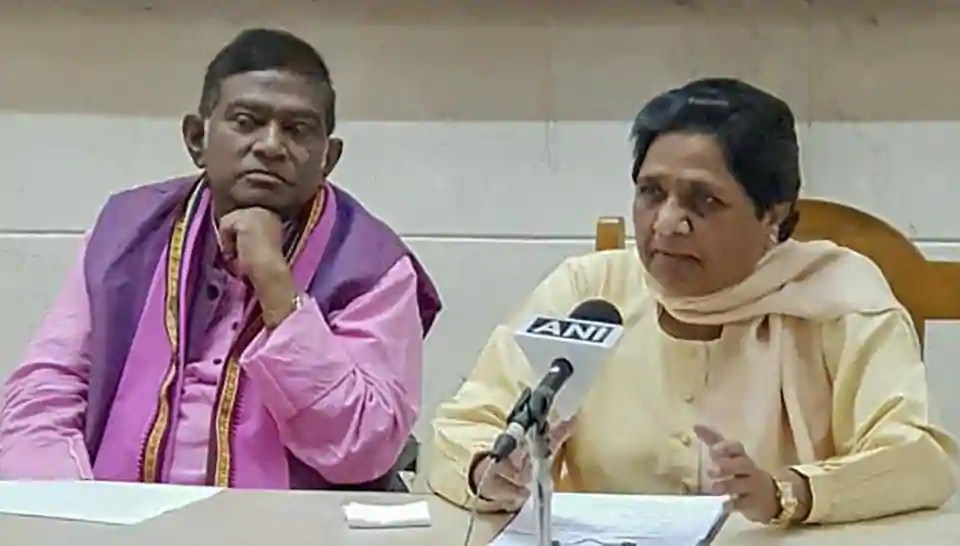
BSP Announces Decision To Contest All 200 Assembly Seats In Rajasthan

The Bahujan Samaj Party or BSP is planning to contest all 200 assembly seats in Rajasthan, which is going to polls on December 7.

The party won three seats in the 2013 assembly elections by securing a 3.37 per cent vote share, which was 7.60 per cent in the 2008 elections, when the party had won six seats.

“Our preparations are in full swing and we will contest on all 200 seats in the forthcoming elections,” state party vice president Dungarram Gedar said.

In the last assembly elections, the party had contested in 195 constituencies.

He informed that the tickets will be finalised soon and BSP chief Mayawati will hold rallies in the state.

“We are expecting to increase our tally in the 2018-elections because people are unhappy with both the BJP and the Congress. There is a resentment against the ruling BJP and people are not seeing any hope in the Congress,” another BSP leader Bhagwan Singh said.

He informed that the party chief will hold rallies in different parts of the state during elections.

Districts in eastern Rajasthan like Bharatpur, Dholpur, Karauli, Sawaimadhopur, Alwar and in northern parts like Hanumangarh, Sriganganagar, Bikaner has significant number of Scheduled Castes (SC) population, which is the vote bank of the party.

In the state, there are 34 Scheduled Castes and 25 Scheduled Tribe seats out of the total 200 seats.

“The BSP is contesting solo and the Congress is going to suffer a loss,” he said on Mayawati’s recent announcement of not having alliance with the Congress for contesting assembly polls in Rajasthan and Madhya Pradesh.

The party is contesting assembly elections in the state since 1990, but it registered its first victory in 1998 by winning two seats.

In 1998, the party had fielded 108 candidates and secured 2.17 per cent vote share.

In 2003 elections, the BSP fought in 124 constituencies and won two seats and increased its vote share to 3.98 per cent.

The biggest victory of the party in the state was in the 2008 elections when six of the party’s candidates won elections and the vote share increased to 7.60 per cent.


Disclaimer: RSS has been taken from their official website.

Fight Over Party Tickets Could Be A Problem For Rajasthan Congress

In Rajasthan, where assembly elections are scheduled for December 7, Congress has managed to put up a united face by bringing former chief minister Ashok Gehlot and state Congress chief Sachin Pilot together. But it is still trying to deal with the squabble over tickets.

At a rally in Jaipur in August, Congress president Rahul Gandhi had said no outsider would get a ticket to the assembly election. “I can guarantee you this time that not a single parachute candidate will be able to get the ticket. If any such candidate comes, I will cut the rope,” Mr Gandhi told party workers.

The party’s state election committee has put the ball in Rahul Gandhi’s court for a final decision on distribution of tickets.

Congress leaders claimed a decision on candidates at the local level could backfire at a time when the party has managed to create some political buzz in the state, which usually votes the BJP and the Congress alternately to power.

Mr Gehlot, in his ‘Sankalp Rally’ speeches, had urged Congress workers and leaders to support the candidates who are picked. He said only one person could get a Congress ticket from a seat and all party men should help that candidate win.

Kumari Selja, who was appointed chairperson of the party’s screening committee for the election in Rajasthan in June, has said only “winnable” candidates will get the tickets.


Disclaimer: RSS has been taken from their official website.

ITI to set up 40,000 outdoor WiFi access points in Rajasthan

State-run telecom equipment manufacturer ITI has won a Letter of Intent (LoI) from RajCOMP Info Services, a Rajasthan Government undertaking, to execute the RajNet project valued at 334 crore. Under the project, ITI will set up 40,000 outdoor WiFi access points in Rajasthan.

It will supply, install and maintain outdoor WiFi access points along with associated RF radio equipment for six months. This will be followed by operation and maintenance of the network for five years, the company said in a statement.

In August 2018, ITI – a public sector unit under the Department of Telecommunications (DoT) – had emerged as the lowest bidder for the RajNet project.

“ITI has been involved in the implementation of the Digital India programme in various Indian states. This order from the Rajasthan Government to establish outdoor WiFi access points in the State is expected to enhance the broadband accessibility in remote villages and complement the efforts of Bharatnet Phase I and II to provide last-mile connectivity in far-flung areas of the country,’’ K Alagesan, Chairman and Managing Director, ITI, said.

The RajNet project is expected to provide connectivity till the Gram Panchayat level through broadband, SATCOM, Over-the-Air (OTA), Local Area Network (LAN) and Structured Wireless-Aware Network (SWAN), among others.

Earlier in October, ITI had filed draft papers for a follow on public offering (FPO) with SEBI, a move that will help it meet the minimum 25 per cent public shareholding rules. The company plans to issue fresh shares worth up to 18 crore, while an additional 5 per cent of the net issue will be reserved for employees.

It intends to use the net proceeds worth 642.60 crore of the issue for working capital requirements and 638.40 crore for repayment of loan. Funds for the general corporate purpose were to be finalised after deciding on the issue price.

BOB Capital Markets, Karvy Investor Services and PNB Investment Services are the Book Running Lead Managers to the issue.

18 fresh cases of Zika in Rajasthan, total reaches 50

At least 18 more people have tested positive for Zika virus in Rajasthan’s Jaipur as of Friday.

A total of ten new cases of the virus came up in Shastri Nagar locality and 276 teams have been deployed in the affected wards.

The total number of people tested positive for Zika virus has reached 50 in Jaipur. Almost 11,313 houses were surveyed out of which 2,282 were positive for mosquito breeding. With over 39,000

containers have been checked out of which 3,567 are positive for larvae. For preventive measures, 133 blood and urine samples have been collected and sent to SMS Hospital.

Earlier, a department official had said that 30 of the total cases were doing fine after treatment.

At the review meeting, measures taken to contain the situation were discussed.

The first case came to light on September 22. The area has been fogged to prevent the spreading of virus.

The department has also issued an advisory for pregnant women staying outside Shastri Nagar not to visit the area.

A control room has been activated at the National Centre for Disease Control to monitor the situation.

The number of monitoring teams in Jaipur has been increased from 50 to 170 and a special isolation ward has been created at the Hira Bagh Training Centre to treat the Zika virus-affected patients.

A team from the National Institute of Malaria Research (NIMR) recently found Zika virus in some mosquitoes taken as samples from Shastri Nagar, leading to suspicion they are behind the infection.
Dr Neena Valecha, the NIMR director, had earlier said the virus appears to be locally transmitted.

The state government has been provided information, education and communication (IEC) material prepared to create awareness about Zika virus and prevention strategies.

The Zika virus, transmitted through Aedes aegypti mosquito, causes fever, skin rashes, conjunctivitis, muscle and joint pain. It is harmful to pregnant women, as it can lead to microcephaly, a condition in which a baby’s head is significantly smaller than expected, in newborn children.

In India, the first outbreak was reported in Ahmedabad in January 2017 and the second was reported in Tamil Nadu’s Krishnagiri district in July that year. Both these outbreaks were successfully contained through intensive surveillance and vector management, the ministry had said earlier.

The disease continues to be on surveillance radars of the Union Health Ministry although it is no longer a Public Health Emergency of International Concern under WHO notification since November 18, 2016.


Disclaimer: RSS has been taken from their official website.

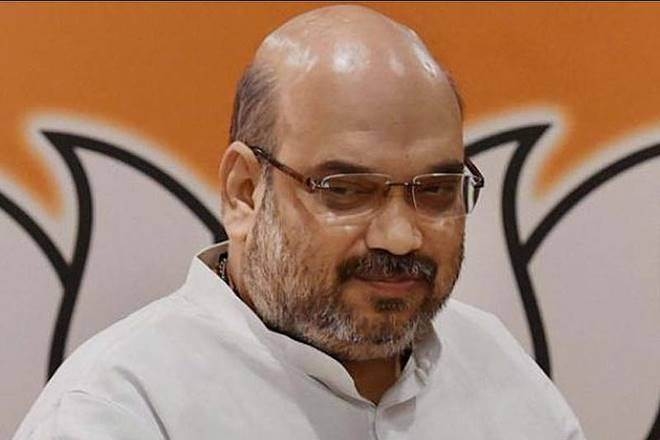
Amit Shah fields trusted central ministers to gather full info from poll-bound Rajasthan

BJP chief Amit Shah has assigned at least four Union ministers of state to gather “genuine” inputs from assembly segments in Rajasthan where the ruling BJP is battling anti-incumbency and a resurgent Congress in the upcoming state elections.

Rajasthan is due to go to polls on December 7. Elections in four other states—Madhya Pradesh, Chhattisgarh (both ruled by BJP), Telangana and Mizoram—are also scheduled to be held over November and December.

BJP sources said Shah has asked Mansukh L Mandaviya (chemical & fertilizers), Satya Pal Singh (human resource development), Shiv Pratap Shukla (finance) and Krishna Gopal (social justice) to monitor party activities in Rajasthan and give immediate feedback to him. They will also handle “damage control” should the need arise.

“Mansukh bhai has been given the charge of Udaipur, Satya Pal Singh would take care of Sikar while services of SP Shukla and Krishna Gopal would be put in use as and when needed,” said a senior BJP leader.

Shah has also summoned party leaders from other states to take charge of organisational activities in the state. “Minister in UP Mahendra Singh has been given responsibility of Bharatpur, former home minister of Gujarat Shankar bhai would take care of Jalore, Sirohi and Pali while MP from UP Sanjeev Balyan has been given the charge of Kota,” said the BJP leader quoted above.

There are several other trusted lieutenants of Shah, including Jeevan Garg of Punjab, KC Patel of Gujarat, Pawan Rana of Himachal Pradesh, Ashish Sood of Delhi and Parliamentarian from UP Satyapal Saini who have been summoned for ‘election duty’ in Rajasthan.

“Shah is giving more attention to Rajasthan than Chhattisgarh and Madhya Pradesh, which are also going to polls,” said another BJP leader, who works closely with BJP state chief Madan Lal Saini. “He knows that the party needs maximum fillip in Rajasthan. So, without taking any chance, he is fielding his best men for the poll job in the state.”


Disclaimer: RSS has been taken from their official website.


“Make In Dholpur”: In Rajasthan, Rahul Gandhi Tweaks PM’s Initiative

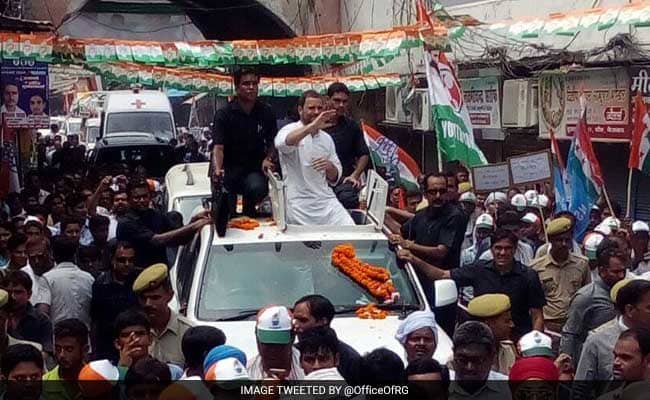
Dholpur, a small town in eastern Rajasthan, hit the trending lists on social media today as Congress chief Rahul Gandhi, on election trail in Rajasthan, promised to put in on the Make in India map. Mr Gandhi is on a two-day tour of BJP-ruled Rajasthan, where assembly elections will be held in a single phase on December 7.

The Congress chief, who has repeatedly accused the Narendra Modi government of failing to create jobs through his Make in India initiative, said, “Your phones are all made in China. I want them to be made in made in Rajsthan, Dholpur… I want people to realise where Dholpur is”.

Recently, PM Modi inaugurated what is billed as the world’s largest mobile phone manufacturing facility by Samsung — but in the outskirts of national capital Delhi.

This was Rahul Gandhi’s third visit in the state, where Chief Minister Vasundhara Raje is seeking a second term. In nearly three decades, Rajasthan has not allowed any party two terms in power. It gives a natural advantage to the Congress, whose state chief Sachin Pilot is leading the campaign.

Mr Gandhi’s 163-km roadshow in six constituencies of Dholpur and Bharatpur is aimed at taking on Ms Raje on her home ground. The Chief Minister is a former royal from Dholpur, but the area also happens to be one where the Congress has a toehold. In the 2013 election, when the Congress was all but wiped out in the state, winning only 21 of 200 seats, it managed to retain four seats in the Dholpur-Bharatpur belt.

COMMENT

The Congress chief – who is planning to cover six constituencies by Wednesday – said despite a four-year-rule, neither PM Modi nor Vasundhara Raje has done much for the people in Rajasthan.

“When the UPA government was in power, we gave you MNREGA, farm loan waivers to the tune of Rs. 70,000 crore, rice and food for the children… what has Narendra Modi and Vasundhara Raje done for the poor, the farmers?”

Dholpur is the constituency of Shobah Rani Kushwaha, who won it in 2017 after the incumbent – her husband Banwari Lal Kushwaha – was convicted in a murder case. Though Banwari Lal Kushwaha belonged to Mayawati’s party, the BJP offered a ticket to his wife. The election was a prestige issue for the BJP, and Chief Minister Vasundhara Raje campaigned for days at Dholpur palace to craft a victory.

The Congress had suffered its worst humiliation in Rajasthan in 2013, winning only 21 of the 200 assembly seats. Vasundhara Raje had swept to power with 163 seats.


Disclaimer: RSS has been taken from their official website.