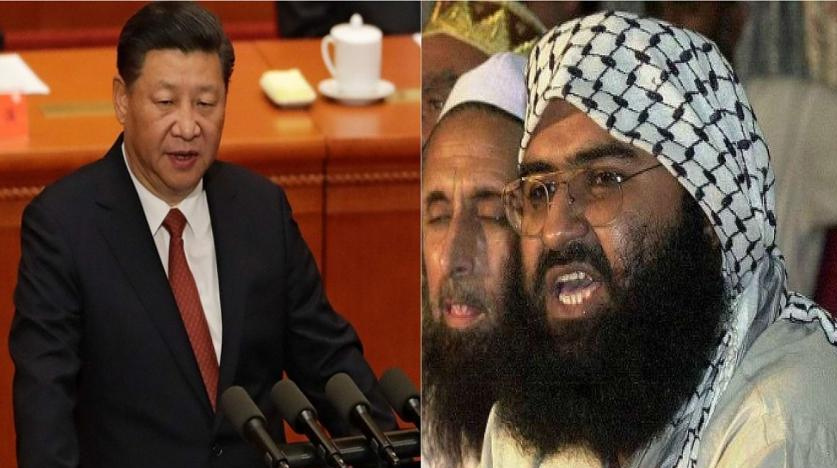
UN designates JeM chief Masood Azhar as global terrorist, China Removes Objections


In a notable diplomatic victory for India, Masood Azhar, the chief of Pakistan-based terrorist organisation, Jaish-e-Mohammed (JeM), is likely to be listed as a global terrorist by the United Nations (UN). Indian efforts to get the JeM chief sanctioned had been frustrated for long by China. The last instance of a Chinese technical hold came on March 13 — barely a month after the dastardly terrorist attack in Pulwama claimed by JeM. The UN had named JeM in a statement condemning the Pulwama attack. But that did not make China budge on Azhar’s listing.

To be sure, the UN listing, if it happens, is a symbolic move. Even if Azhar hadn’t been listed, JeM was. Lashkar-e-Taiba (LeT) and its chief, Hafiz Saeed, are also listed under the UN 1267 resolution. These listings have done little to stop the terrorist groups from operating freely in Pakistan and mounting attacks on Indian soil. The grey-listing of Pakistan by Financial Action Task Force (FATF), an intergovernmental body that targets money laundering and terrorist financing, has been a little more effective in forcing Islamabad to take some action, albeit cosmetic, against the terrorist groups.

Pakistan’s defiance is a real problem. But India’s options are limited. First, it can undertake military actions against terrorist groups operating on Pakistani soil. The 2016 surgical strikes and the Balakot airstrikes in February this year show that New Delhi is increasingly preferring this route. By taking to military options, it hopes to increase Pakistan’s costs of using sub-conventional assets against India. But with Pakistan’s nuclear status, there is an upper limit to what India can achieve. Second, it can put diplomatic pressure on Pakistan to stop anti-India terrorist activities on its soil. The sanctions under the UN and FATF are part of this approach. However, as China’s resistance to Azhar’s listing shows, this is not an easy route either. Moreover, there is no guarantee of a result — a genuine crackdown on Azhar and JeM in Pakistan remains elusive. Three, India can try to get a global buy-in for a comprehensive convention against terrorism. The idea of a convention does hold some promise. Just like an agreement on nuclear non-proliferation, that is NPT, changed the perception of a nuclear weapons test from a prestigious activity to one inviting international condemnation, such a convention against terrorism can increase the reputational cost for countries supporting terrorism. India will need to pursue all options simultaneously.


             BE HEALTHY


     BEST PRODUCTS FOR                      BEST LIFE

                  BE HOT


BE SMART


Disclaimer: RSS has been taken from their official website.
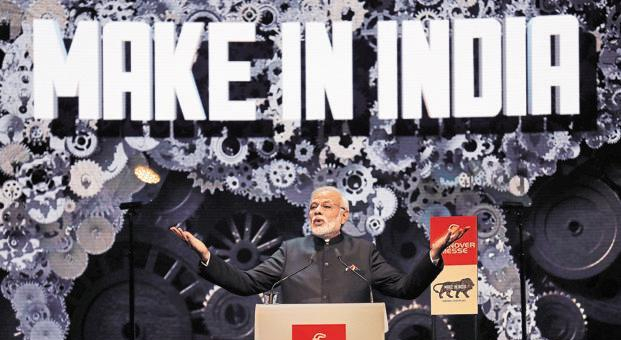
Make In India : About 200 US companies seeking to move manufacturing base from China to India: USISPF

The US-India Strategic and Partnership Forum’s (USISPF) President Mukesh Aghi said that the companies are talking to them about how to set up an alternative to China by investing in India.

About 200 American companies are seeking to move their manufacturing base from China to India post the general elections, a top US-based advocacy group has said, observing that there is a fantastic opportunity with firms looking at alternatives to the Communist giant.

The US-India Strategic and Partnership Forum’s (USISPF) President Mukesh Aghi said that the companies are talking to them about how to set up an alternative to China by investing in India.

Aghi said that USISPF’s recommendation to the new government would be to accelerate the reforms and bring transparency in the decision-making process.

“I think that’s critical. We would advise to bring more transparency in the process and to make it more consultative because in the last 12 to 18 months, we are seeing US companies look at some of the decisions being made, either e-commerce or data localisation, as more domestic-oriented than global,” he told PTI in an interview.

In his reply to what the agenda of the new Indian government should be to attract investment, Aghi suggested that New Delhi needs to accelerate reforms, be more transparent in the process and engage more.

“We need to understand how we can attract those companies. And that means all the way from land issues to customs issues to being part of the global supply chain. Those are critical issues. There’s a whole plethora of reforms that need to go further down, and I think that is also going to create a lot of jobs,” he said.

He said that Mark Linscott, the former Assistant US Trade Representative for South and Central Asian Affairs, is working with USISPF member companies to come up with a recommendation as to what India needs to do to enhance its exports and work up from that perspective.

“One recommendation, which I strongly believe is going to help India is that we should now start thinking of a Free Trade Agreement (FTA) between India and the US,” Aghi said.

“I think if India is concerned about cheap goods coming from China, an FTA will eliminate that need. You can put barriers to Chinese goods and still have the US providing access to the Indian market and Indian companies having more access to the US market, and issues like GSP would diminish,” he said.

Aghi said that they have formed a high-level manufacturing council within the member companies, led by John Kern, Senior Vice President of Supply Chain Operations at Cisco who are putting a document together detailing what India needs to do to turn it into a manufacturing hub.

“We plan to have the document ready by the time elections are over as part of recommendation,” he said.

“What they’re saying is we want a backup strategy to start manufacturing in India. There are small-small issues, which can slow them down. And at the moment most of them are waiting for elections to be over. But there’s a large deluge of companies keen to not only manufacture in India but also who want to go after the domestic market,” he said.

On the amount of investment these companies would bring to India, he said the number in question is substantial.

“If you look at, our member companies in the last four years have invested over USD 50 billion,” he added.

Disclaimer: RSS has been taken from their official website.